
According to Danske Rederier (Danish Shipping), the European Commission estimates that 280m tons of CO2 will need to be captured to meet the ambitious 90% greenhouse gas emission reduction target in 2040, an ambition in which the shipping and ports industries will be an integral part of transporting CO2 in CCS processes.
A recent round table debate in Denmark considered this issue. A key point from the debate was that coordination with regards to the needs of the ports is crucial to shape the framework around a carbon capture and storage (CCS) market. This will additionally help de-risk investments which can spark the European venture of CCS.
Bjarne Løf Henriksen, Head of EU Representation, Danish Shipping said: “Ports and specialised CO2 ships and pipeline infrastructure are going to be essential parts of the CCS value chain if we are to meet the 90% GHG emissions reduction target by 2040. Renewed connections between land and sea are required to create a multimodal CO2 transport network. Ports and shipping companies must be ready to seize the opportunity and take part in making CCS good business for Europe as well as making a significant contribution to the green transition.”
Danish Member of the European Parliament (MEP) Bergur Løkke Rasmussen added: “This event underscores the importance of focusing on the CO2 storage value chain in Europe. The technology to achieve the necessary reductions through CO2 storage is available – but now the focus should be on creating the best possible policy framework for capture and storage, benefiting growth, employment, and, notably, the climate. I look forward to working towards this, both now and in the upcoming political term.”
Ports and offshore shipping companies are belived to be already well under way with preparations and are ready to do their part. A European political framework and the required infrastructure will need to be in place, so capture, transport, utilisation, and storage of CO2 on the scale required can be made a reality.
Peter Hindsberger, Senior Regulatory and Public Affairs Manager, INEOS Energy Denmark said: ”With Project Greensand, we have demonstrated that it is technically feasible to transport CO2 across national borders and store it offshore. Now, we need to scale up carbon capture, transport, and storage. European ports play a significant role in this value chain. It is crucial to create the necessary conditions for establishing CO2 terminals and temporary storage facilities in ports. Moving very large amounts of CO2 by 2050 to meet climate goals requires the right incentives and necessary infrastructure to be put in place.”
Sofie Cuypers, Public Affairs Advisor, Port of Antwerp-Bruges concluded: ”Port of Antwerp-Bruges will be an important CO2 hub in the future. We welcome the European framework on CCS that is being developed for the further implementations of projects such as Antwerp@C. We are very thankful for the fruitful and interesting insights today with the relevant stakeholders and policy makers.”
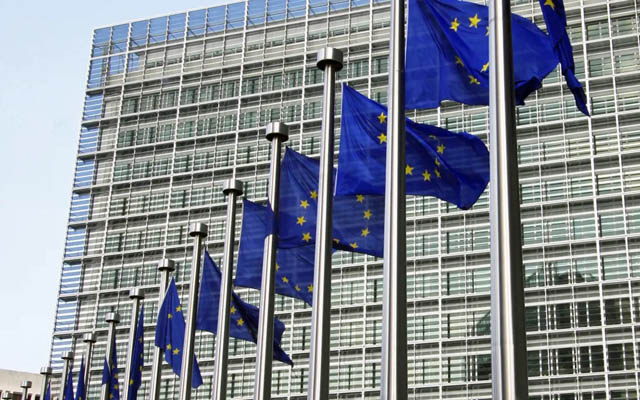
Image: EU flags (source: Danske Rederier)