
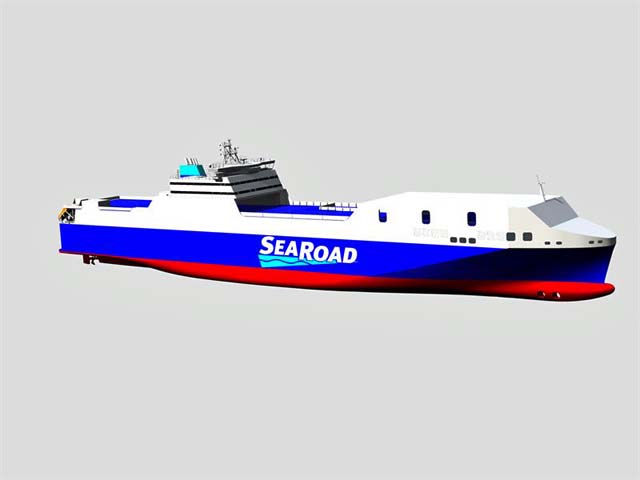
Wärtsilä has been contracted to supply main and auxiliary engines, fuel storage tanks, gas handling equipment and electrical systems for a new ro-ro being built for Australian operator SeaRoad Shipping.
The 210m vessel is under construction at the Flensburger Schiffbau-Gesellschaft (FSG) shipyard in Germany. The vessel will operate primarily on LNG fuel. Wärtsilä’s depth of experience and in-house know-how on LNG systems was a major consideration in the award of the contract.
The vessel will be powered by two Wärtsilä 46DF dual-fuel main engines and three Wärtsilä 20DF dual-fuel auxiliary engines. The Fuel Gas Handling System and LNG tanks are designed with the Gas Valve Units (GVUs) integrated into the tank connection space. This solution is believed unique to Wärtsilä and reduces the amount of piping needed, facilitating easier installation.
Wärtsilä will deliver most of the onboard electrical equipment, including bridge consoles with integrated navigation, redundant dual-gyro compass systems, nautical sensors, external communication systems, power take-in and take-out (PTI/PTO) shaft alternators with multi-drive technology, monitoring and control systems, switchboards, internal communication, and safety systems as well as lighting. Wärtsilä will design and integrate the entire electrical package, as well as delivering the cable network. The integration project continues a successful partnership between FSG and Wärtsilä in this area lasting more than 25 years.
Philip Maracke, CEO, FSG said: “We recognise Wärtsilä’s strong capabilities in LNG-related technologies, as well as their capabilities in electrical systems, and these solutions are an excellent fit for this vessel. We thank Wärtsilä for its excellent support and cooperation during the various phases of this project.”
Matthias Becker, GM Sales, Wärtsilä Marine Power, said: “We have enjoyed a very positive relationship with both the yard and the owners throughout this project. SeaRoad is committed to sustainable practices, and this very much aligns with our own commitment to the decarbonisation of shipping operations. The solutions selected for this vessel promote these ambitions.”
The ship is expected to be completed by the end of 2023. The vessel will have 3,987 lane metres for various freight units and will sail on Bass Strait, between Melbourne, Victoria and Devonport on the Australian island state of Tasmania.