
According to Dutch company SodaFlexx International, as a growing number of international ports and coastal regions move to restrict or ban the discharge of wastewater from open-loop scrubbers, shipowners are increasingly seeking alternatives that ensure compliance without compromising operations.
One such solution, the N-Flexx dry exhaust gas cleaning system from SodaFlexx International, is already in operation and said to be gaining renewed attention as environmental regulations continue to evolve.
The bans—which target the discharge of sulphur-laden wash water into sensitive marine environments—are part of a broader regulatory shift aimed at reducing ocean pollution from shipping. While open-loop scrubbers have been used to meet sulphur emission requirements, their perceived environmental impact is now under scrutiny, leading to uncertainty and limitations in key trading areas.
The N-Flexx dry scrubbing technology addresses these concerns by eliminating the need for wash water altogether. It removes SOₓ from exhaust gases using a dry absorbent material, producing no liquid discharge. This approach provides compliance with sulphur emission regulations while aligning with emerging environmental restrictions on wastewater disposal.
Unlike traditional scrubbers that require complex water handling and treatment systems, N-Flexx is compact and does not rely on pumping, storing, or discharging water, making it suitable for both newbuilds and retrofits.
With ports such as Singapore, Fujairah, and various regions within the European Union and Baltic states implementing restrictions on open-loop scrubber discharge, shipowners face operational limitations that can affect routing, port access, and compliance confidence. Dry scrubbing technologies such as N-Flexx can offer a pathway to navigate these restrictions without relying on hybrid modes or complex water management systems.
SodaFlexx International believes that dry scrubbing is not a concept for the future—it’s already being used, and it’s ready to scale. The N-Flexx system has been installed on vessels operating across multiple geographies, including emission control areas and ports where wet scrubber discharge is no longer permitted. Its operational simplicity and dry waste handling are considered to offer an attractive solution for owners focused on long-term compliance and minimising environmental impact.
As the maritime sector continues to adapt to stricter environmental standards, solutions that combine regulatory certainty with operational practicality are expected to play a growing role.
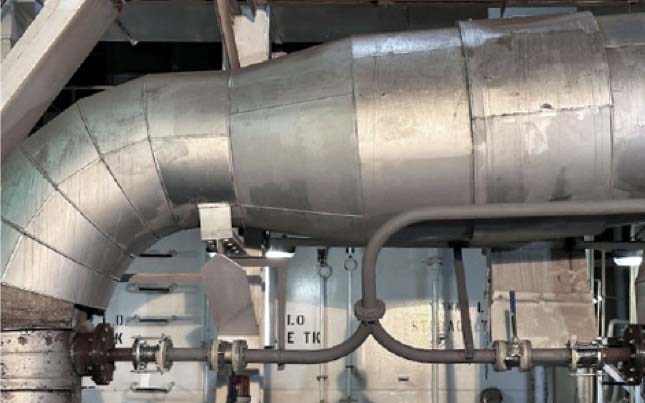
Image: NaHCO3 injection point (source: SodaFlexx)