
A trend towards more use of data-driven, digital vessel performance systems is gathering pace in the shipping industry was one of the main takeaways from the 10th HullPIC conference, but with ship operators saying that there are challenges still to be overcome.
The 10th Hull Performance and Insight Conference (HullPIC) was recently held in Mulheim, Germany. The annual conference, initiated by Jotun and VB conferences and supported by industry sponsors, attracts a wide range of stakeholders, including ship operators, technology and solution providers, data analysts and classification societies.
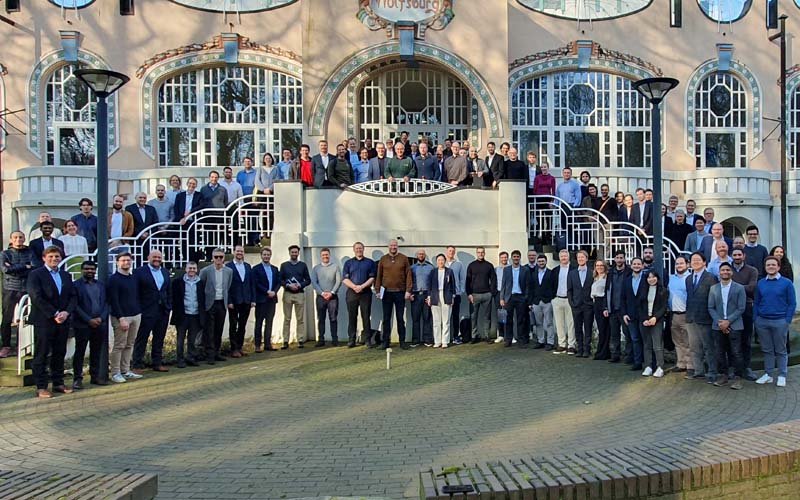
With market pressures and regulatory developments forcing the maritime industry to focus on energy efficiency and meeting environmental challenges, ship operators are eyeing opportunities in ship performance monitoring and efficiency-based technologies and solutions. A significant number of those operators were joined by technology and solution providers and others at HullPIC where 85 industry professionals gathered from around the globe.
When all delegates were asked what information sources they employed to analyse hull performance, around a third said auto logged sensor data. However, of the shipping company delegates the majority used either a combination of noon reports and external data such as weather or noon reports alone. At the moment only about a quarter of shipowner delegates used auto logged sensor data. There is, however, a more positive attitude towards a move to auto logged data where only a quarter of the delegates thought it would take ten years or more for 95% of shipping companies to use auto logged data but 70% thought the switch would come in between two- and ten-years’ time.
Clearly the focus on performance management is growing in the industry and leading ship operators and solution providers are taking important initiatives to improve performance monitoring. But what needs to be done to speed up the wide scale adoption of data-driven, digital systems? This was the theme of the session which brought together a panel of operators and developers.
Elkan Moses (TUI Cruises) thought standardization is the key and that the uptake of systems is based on business case and return on investment evaluation. He said, “Standardization and creation of an ecosystem where the data can be interfaced with multiple solutions (performance, optimization, emission reporting, ETS etc) would lead to clear financial advantage and would definitely push for wide scale adoption.”
Falko Fritz (Albis Marine Performance) made the point that “For many ship operators, the performance monitoring solutions market is rather confusing, but knowledge of new technologies is growing. The technology to monitor hull condition reliably is available and getting better by the day. Now we just need to convince the ship owners to use it.”
Bjørn Walther (Zeaborn Ship Management / Bestship Services) said “Ship performance monitoring is complex, but the use of data-driven solutions can help to show owners how their ships are actually performing. Certainly, there are a lot of good systems, but different approaches are used and it often boils down to money and getting value.”
Richard Marioth (Idealship) offered another viewpoint saying, “It is mostly about the lack of awareness about the actual benefits at the decision-makers level. Typically, these are not technical people. There is a need to increase the awareness of the benefits on the business side as well. If they see the benefits, then they will start to use it.”
Regulations and financial benefits driving up interest
Audience members including Malte Mittendorf (Maersk Line), Said Al Natsheh (Bahri Ship Management), Luka Scherens (CLdN), Frederik Hammer Berthelsen (DFDS), Lajos Holmslykke (TORM) and Carsten Manniche (Navigator Gas) all offered comments that echoed these sentiments and stressed the importance of data and the link with financial benefits, while also saying that more regulation is also a driving factor that should not only not be ignored but in many cases should actually be welcomed.
A few of the comments also noted that time charterers as well as operators need to be more aware of the benefits and maybe even contribute in some as they are most likely to gain from improved performance. Regulations such as the EU ETS scheme and the IMO’s EEXI and CII were mentioned as was the impact of “ESGF-conscious clients who are willing to pay more for an ESG-conscious operator.”
Summarising the conference, Jotun’s Morten Sten Johansen said, “There is growing consensus that data-driven, digital vessel performance systems are necessary to help make shipping more sustainable but there are challenges and wide scale adoption will take time. There are, however, a lot of good initiatives underway to improve vessel performance and progress is being made through collaboration and knowledge sharing as evidenced by the presentations and papers at HullPIC.”
Image: Delegates at HullPIC (source: Jotun)