
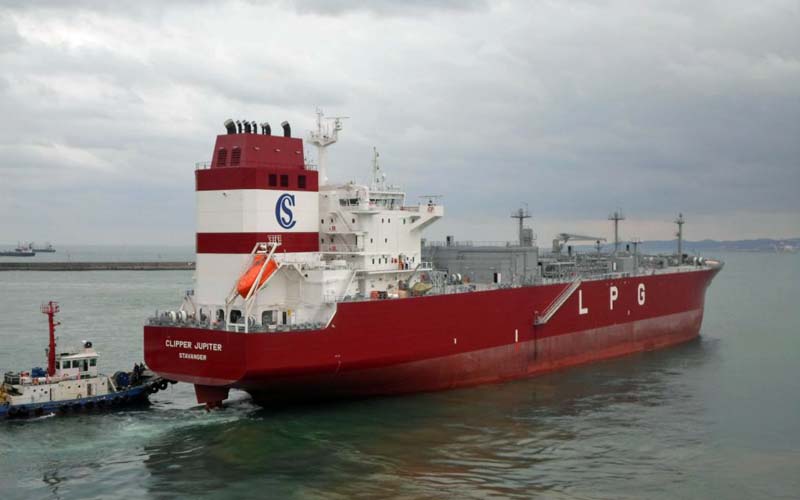
In a letter to maritime trade paper ‘Tradewinds’, reproduced on the Clean Shipping Alliance website, Anders Valland, research manager, Sintef Ocean, Tor Oyvind Ask, fleet director, Solvang and Stian Aakre, GM R&D, Wartsila Moss, have made the case against the projected exhaust gas cleaning system (scrubbers) ban.
The letter reads: “It has been 20 years since the International Maritime Organization introduced its first guidelines on the use of exhaust gas cleaning systems (scrubbers). Since then, and rightly so, focus has been on the pros and cons of this technology. Technology developers, shipowners, operators and legislators all agree on the importance of optimising the environmental performance of this robust technology, which efficiently removes sulphur oxides (SOx) from ship exhaust gases. Given this decades-long background, it is concerning to read a piece in TradeWinds on 1 April written by Eelco Leemans, a technical adviser to the Clean Arctic Alliance.
His viewpoint contains what we believe to be errors and misunderstandings that are derailing the discussion, in our view. We will address what we see as the most significant errors in the following:
- “However, in a sleight-of-hand, the pollutants are then dumped into the ocean, transferring the problem to the marine environment, allowing vessels to continue burning fuels such as high-sulphur fuel oi!.”
A scrubber is not “transferring the problem to the marine environment”. A scrubber employs a chemical process, in which the SOx created in the engine combustion is transformed into sulphates, which are then released into the ocean. Sulphates are naturally occurring constituents in seawater, with a global average concentration of 2,700 ppm. Even if the entire global fleet were to use heavy fuel oi! (HFO) and scrubbers for 150 years, the average concentration of sulphates in seawater would only increase marginally to 2,701 ppm.
- “There are no global restrictions on scrubbers’ discharges even in protected areas, but with many countries prohibiting discharges or even scrubber use, the IMO should enact a ban on scrubbers to protect the oceans from large-scale, deliberate pollution.”
As mentioned above, the IMO guidelines for exhaust gas cleaning systems have existed for 20 years, containing restrictions on key elements expected to be found in scrubber discharge water. Extensive research conducted by renowned researchers and institutes ensured that these guidelines appropriately addressed scrubber water discharges. It was determined that turbidity, temperature, nitrates, pH and polycyclic aromatic hydrocarbons are the components that require monitoring and discharge limits for those were developed.
- “The scrubber wash water also removes heavy metals, nitrites and nitrates, and highly carcinogenic polycyclic aromatic hydrocarbons – and dumps them in the ocean.”
We must keep in mind that scrubbers do not create any pollution. All unwanted components in the scrubber discharges originate from fuel, lubrication oi! and engine wear. Furthermore, when examining scrubber discharges, one must keep in mind most of the components are already present in ambient seawater. Hence, any net increase above ambient concentration should be addressed when discussing discharge levels. Several so-called scientific publications fail to do this and derail the discussion, comparing discharge concentrations with “pristine” waters. Additionally, some components are deliberately added to water discharges from a ship as a consequence of anti-growth equipment installed in cooling water systems on board. These can be elements such as copper and zinc, and have nothing to do with the scrubber system.
Shipping is essential for global trade and will not simply cease to exist if scrubbers were to be banned. Therefore, it is imperative to understand that the alternative to using HFO with a scrubber is not clean air through the exhaust pipes. The vast majority of ships will use, or are already using, variants of low-sulphur fuel oi! or very low-sulphur fuel oi! to comply with SOx regulations. These fuels are also derived from HFO and will have similar emission patterns. From an air pollution perspective, using HFO in combination with a scrubber is an environmentally superior solution to burning any fuel derived from HFO without a scrubber.
- “As the continued use of fossil fuels is being phased out globally, the shipping industry should stop prevaricating and procrastinating, and instead ban the use of scrubbers.”
For the benefit of the planet, world trade and the shipping industry, environmental legislation should be kept technology-neutral. Ships pollute in various ways, but shipping is essential. We should protect the environment by continuously monitoring the need for tighter emission limits. Banning a highly efficient SOx removal technology is short-sighted and counterproductive.
Our collective effort to protect the environment should be grounded in scientific evidence, not emotionally driven by opinions about specific technologies. If components in scrubber discharges should be controlled in some or all areas, we should establish safe threshold values for the discharge rather than discuss banning a very efficient and useful technology.
Image: Solvang is a prominent user of scrubber technology in its fleet (source: Solvang)