
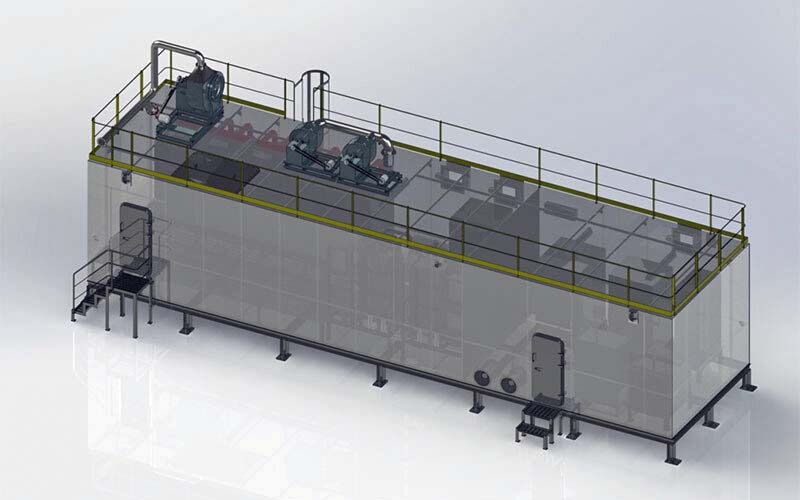
Mitsui OSK Lines (MOL) and Samsung Heavy Industries (SHI) have jointly acquired approval in principle (AiP) from Lloyd’s Register (LR) for the design of a 174,000m3 LNG carrier equipped with solid oxide fuel cell (SOFC) technology.
The LNG carrier will be equipped with a 300kW SOFC, supplied by Bloom Energy, to be used as an auxiliary power generator and the ship will be delivered in 2027.
SOFC technology is a highly efficient, high-temperature process that converts fuels like natural gas, hydrogen, methanol, or ammonia directly into electricity and heat through an electro-chemical process – without burning them. This efficient energy conversion reduces the amount of fuel required to generate the same amount of electricity, resulting in lower GHG emissions. In addition, since SOFC generates electricity without combustion, emissions of harmful gases such as NOx and SOx, as well as methane slip, can be significantly reduced to negligible levels.
While the installation of SOFC on vessels is still rare, the risk assessment including hazard identification (Hazid) and hazard and operability study (Hazop) were conducted in collaboration with key project stakeholders, resulting in the acquisition of the AiP.
Since mid-2022, in collaboration with MOL and SHI, discussions and development of the application of 300kW of SOFC to the 174,000m3 LNG carrier as a pilot project have been ongoing. In June 2024, MOL and SHI reached an agreement on a mutual application. The system is expected to undergo joint equipment verification starting from early 2027. According to MOL, this partnership showcases its dedication to driving innovation and sustainability within the maritime industry, positioning the company at the forefront of shaping the future of shipping in the move towards achieving net zero emissions. The initiative aligns with the MOL group’s environmental vision, which includes achieving net zero GHG emissions by 2050.
Image: Containerised SOFC module (Source: SHI)