
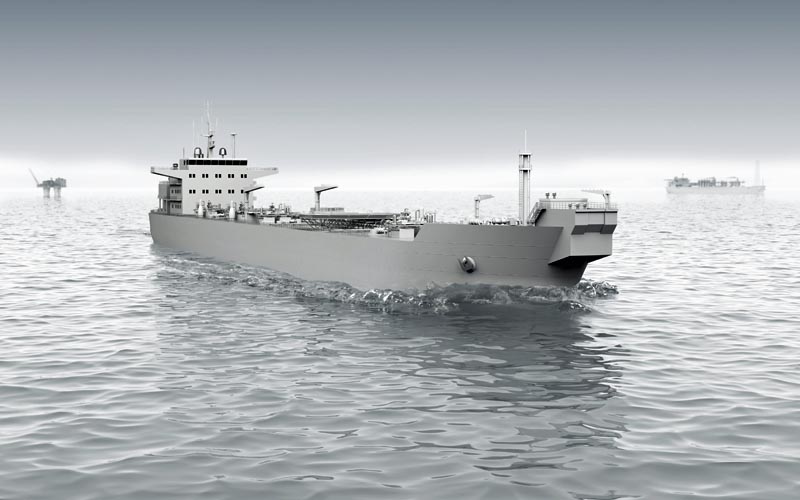
Samsung Heavy Industries (SHI) and ABB have signed an agreement to equip a fleet of shuttle tankers with ABB’s Onboard DC Grid power system platform.
Engineered to optimise fuel efficiency, reduce emissions and enable a flexible integration of energy sources, the technology will be the heart of the integrated power system specified for nine newbuild vessels. The selection of ABB’s technology was driven by the expectations of prioritised efficiency, reliability and operational flexibility, as well as adherence to strict industry standards. The fleet of new vessels will be deployed under bareboat charter to service Brazil’s offshore sector. The vessels are due for delivery starting in 2027.
For ABB, the contract marks the largest order to date for Onboard DC Grid in the shuttle tanker segment, underscoring the growing demand for highly customisable, future-ready power solutions in commercial shipping. The project highlights the power system platform’s ability to deliver high redundancy and seamless integration for energy distribution in low-voltage installations, making it a versatile choice for a wide range of merchant vessels.
Michael Christensen, Global Segment Responsible Cargo Vessels, ABB Marine & Ports, said: “This is an important contract for ABB and a further step forward for our longstanding collaboration with Samsung Heavy Industries. We would like to thank all stakeholders for selecting Onboard DC Grid as the best fit for these advanced DP2 shuttle tankers. We look forward to delivering the solution which enables simple and flexible integration of energy sources, and variable speed control across every motor on the ship to maximize overall efficiency.”
ABB’s system integration delivery will include remote diagnostic support, as well as site support and commissioning for all the nine shuttle tankers. The highly fault-tolerant Onboard DC Grid system platform carries the latest DNV Closed Bus-Tie Notation DYNPOS(AUTR-CBT). Its use of quality components and an autonomous sub-system design philosophy is intended for enhanced safety, extended maintenance intervals, and reductions in both fuel consumption and emissions-related costs.
Image: Shuttle tanker (credit: ABB)