
HAV Design has been appointed as technical partner in a project led by Brazilian CBO to perform what is said to be the first retrofit of a large marine engine to run on both diesel and ethanol.
The project is considered an important breakthrough in efforts to reduce emissions in the offshore industry and to mark a new chapter in the maritime energy transition. At Nor-Shipping 2025 in Oslo, CBO announced that it will convert one of the engines on an offshore vessel to run on approximately 40% ethanol in combination with diesel. The project is the first where a MaK M 32 C engine is being retrofitted to operate on a fixed blend of diesel and ethanol and will be financed by Fundo da Marinha Mercante (FMM) in Brazil, being the first R&D project to have financing approved by the institution.
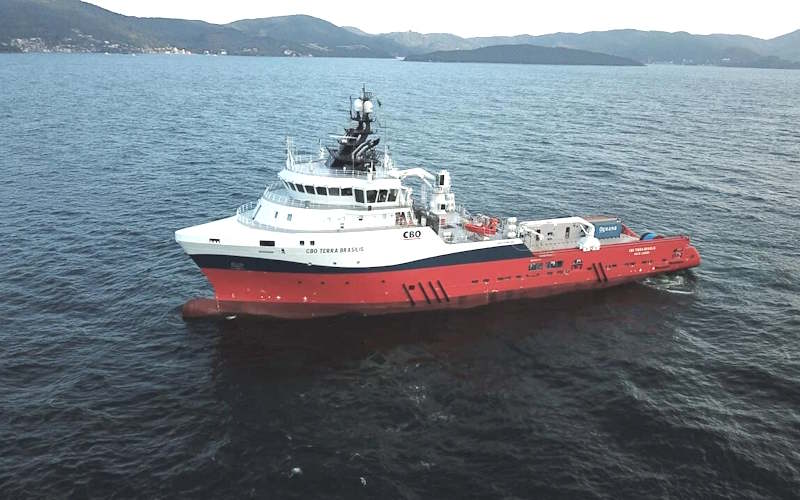
The conversion is expected to take place on one of the company’s six HAV 843 anchor handlers, built between 2017 and 2018. These vessels are among the newest of their class worldwide and are now serving as platforms for testing technologies aimed at reducing emissions.
CBO Innovation Coordinator André Trintini said: “The retrofit approach allows us to test new technology under real operating conditions without reducing vessel availability. It provides a practical and immediate path to lower emissions in the offshore sector.”
HAV Design is working closely with the shipowner, classification society, and suppliers to ensure safe and efficient implementation.
Jan Magne Goksøyr, VP Sales, HAV Design, said: “Our task is to find the best technical solutions for the conversion while also laying the groundwork for such systems to be adopted on a larger scale.”
Senior Designer Kenneth Hjelmseth added: “We develop systems that enable the safe and flexible use of alternative fuels. Ethanol is particularly relevant in Brazil, but the lessons we learn here have global value.”
The project is expected to demonstrate that emission reductions can be achieved in existing fleets—without waiting for newbuilds. The experience gained can later be transferred to other fuel types, giving the technology broad application in an industry facing strict climate requirements.
The system is scheduled to be in operation in 2027, following installation, testing, and certification. Results are expected to deliver a CO₂ reduction of 15–20% per engine when operating with approximately 40% ethanol. An important factor is access to Brazilian ethanol, which has one of the lowest carbon footprints in the world. When produced from genetically improved sugarcane with second-generation technology, lifecycle emissions can be reduced by up to 90%. Thanks to continuous innovations in Brazil’s sugarcane industry — both in crop development and production processes — this solution does not compromise food security nor require additional land to support a potential increase in ethanol demand.
For HAV Design, the project is thought to represent a milestone and a clear positioning in the green maritime transition. The experiences from Brazil is expected to showcase the company’s technological skills and serve as a demonstration of how existing vessels can play a new role in the energy transition.
Goksøyr concluded: “We see this as the beginning of broader work to develop solutions that can accelerate maritime decarbonization. For us, it’s about combining innovation and practical solutions that can be applied here and now.”
Image: A CBO offshore vessel is to be converted to burn ethanol and diesel (source: HAV Design)