
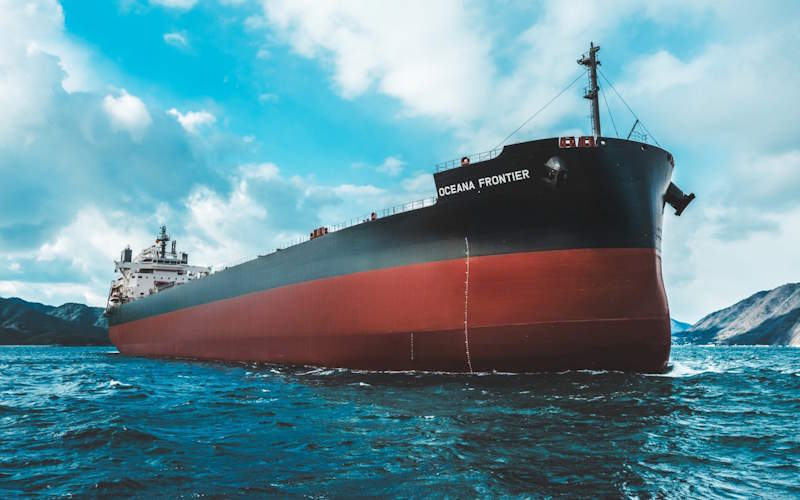
Tsuneishi Shipbuilding of Japan has delivered what the yard says is the world’s first LNG dual-fuelled Kamsarmax Bulk Carrier.
The vessel is equipped with a dual-fuel engine operating on LNG as its primary fuel. Compared with conventional HFO, the use of LNG is expected to reduce CO₂ emissions, while significantly lowering SOx and NOx emissions.
Through optimised hull performance and the integration of energy-saving technologies, including a shaft generator, the vessel achieves over a 50% reduction in the EEDI relative to the reference line, substantially exceeding the Phase 3 requirement of a 30% reduction applicable from 2025.
A key feature of the vessel is the LNG fuel tank installed on the aft deck, adopting an independent type C pressure tank design. The manufacture of LNG fuel tanks requires advanced capabilities, including the precision fabrication of specialised materials, high-quality welding, and thermal insulation systems suitable for cryogenic environments. These processes were carried out at Tsuneishi Shipbuilding’s own facilities. Prior to this project, Tsuneishi Shipbuilding initiated efforts to establish in-house fuel tank manufacturing capabilities for future dual-fuelled vessels, starting with the production of pressure-type tanks for LPG carriers. By utilising its shipyard facilities and overcoming technical challenges such as forming dished end plates, the company has accumulated manufacturing capabilities which have been applied to the LNG fuel tank of this vessel.
The low-temperature and pressure-handling technologies developed through LNG fuel tank manufacturing are expected to be applicable to future fuel tank solutions, including those for ammonia. As the maritime industry continues to explore multiple fuel options, these technologies will form a foundation for supporting the transition towards zero-emission vessels.
Okumura Sachio, President and CEO, Tsuneishi Shipbuilding, said: “The pressure vessel manufacturing technologies and quality control expertise cultivated through the in-house production of LPG tanks have been successfully applied to the LNG fuel tank of this vessel. LNG requires handling under cryogenic conditions, demanding advanced capabilities in material selection, fabrication, welding, and thermal insulation. We believe that continuously strengthening these low-temperature and pressure-handling technologies within the company will provide an essential foundation for responding to future fuels such as ammonia and ultimately contribute to the realisation of zero-emission vessels.”
Image: LNG dual-fuelled Kamsarmax Bulk Carrier (source: Tsuneishi Shipbuilding)