
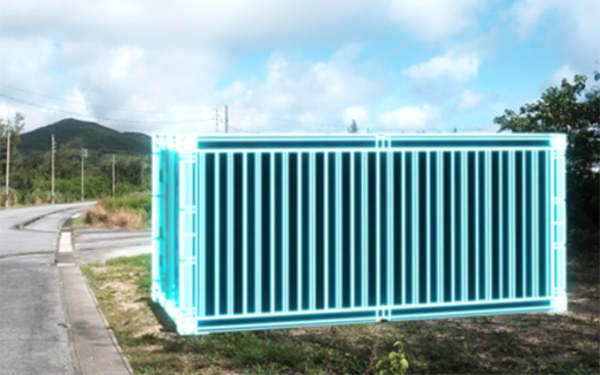
Hitachi, Mitsui OSK Lines (MOL), and Japan Airlines (JAL) have signed a Memorandum of Understanding (MoU) to conduct Japan’s first pilot test on Kume Island, Okinawa, using Direct Ocean Capture (DOC)—a technology that directly separates and captures CO2 dissolved in seawater.
In the pilot test, the three companies aim to confirm the applicability of DOC technology using seawater from around Kume Island, and obtain foundational data on operational challenges and environmental impacts for deployment along Japan’s coast. Specifically, the test will use containerised pilot equipment installed on land on Kume Island, taking in seawater to separate CO2. In addition to this initiative, Kume Island hosts pilot projects that leverage its location, such as Ocean Thermal Energy Conversion (OTEC). With a concentration of expertise and talent in ocean research, the island is thought to offer an optimal environment for conducting Japan’s first DOC pilot test.
Based on the knowledge gained from this project, the three companies will explore potential applications and expansion of DOC technology—including local utilisation of captured CO2, as well as promotional and environmental education initiatives centred on this pilot test—to contribute to the creation of new ocean-based value (the Blue Economy).
In ‘hard-to-abate’ sectors such as shipping and aviation, where electrification alone is difficult and emissions are hard to reduce, offsetting emissions has become a key challenge alongside corporate reduction efforts. As demand continues to grow, expectations are rising for CO2 removal technologies as a key means to address this, driving the need to establish technologies that directly remove CO2 through engineered approaches. Establishing a domestic ecosystem is becoming increasingly important from the perspective of curbing the future cost of procuring carbon credits from overseas.
The three companies have invested in Captura, a US-based DOC technology developer, through their respective investment subsidiaries and other channels, and have been jointly exploring a domestic pilot test toward the deployment of Captura’s technology in Japan by combining the expertise of each company. The companies position this pilot test as a first step toward building an island-based, domestically self-sufficient carbon economy in which the recovered CO2 is ultimately used as a feedstock for synthetic fuels such as sustainable aviation fuel.
Seawater naturally absorbs carbon until it reaches equilibrium with CO2 concentrations in the atmosphere. Artificially extracting and removing CO2 from seawater disrupts this balance, prompting the ocean to absorb more CO2 from the atmosphere to make up for the deficit. By repeating this cycle, atmospheric CO2 concentrations can be effectively lowered via the ocean. The concentration of CO2 in seawater is approximately 100 to 150 times higher than in the atmosphere. DOC is widely expected to offer a promising climate change solution capable of capturing CO2 at lower costs and with lower energy consumption.
Image: Rendering of the container-type pilot test facility (source: MOL)