
US-based renewable fuels company WasteFuel, which specialises in converting waste into low-carbon transportation fuels, and its Turkish integrated waste-management and waste-to-energy joint venture partner ITC, have announced the completion of Front-End Engineering Design (FEED) for their green methanol biorefinery in Ankara, Türkiye.
The facility is engineered to deliver one of the lowest carbon intensities of any marine fuel and completing the FEED study validates its technical design, confirms its cost basis, and positions the partners to advance toward a final investment decision (FID).
Once operational, the facility is designed to produce approximately 50,000t per year of ISCC-certified biomethanol from biogas generated by municipal solid waste. Located adjacent to ITC’s existing waste-to-energy operations in Ankara, the plant is expected to be the largest biomethanol project in the Mediterranean and Middle East, giving the partners a highly differentiated position in a region of growing demand for compliant, low-carbon shipping fuel.
At the heart of the Ankara project is a decisive environmental and commercial advantage: an exceptionally low carbon intensity. The facility’s biomethanol is engineered to achieve a carbon intensity of approximately 9 gCO₂e/MJ, compared with a fossil-fuel baseline of roughly 94 gCO₂e/MJ — a reduction of more than 90% in lifecycle GHG emissions. This places WasteFuel’s fuel among the lowest-carbon marine fuels available anywhere, and the company is actively evaluating pathways to lower the score further, toward a below-zero carbon intensity.
Under EU ETS and FuelEU Maritime, the lower a fuel’s carbon intensity, the fewer volumes a shipping company needs to meet its obligations. WasteFuel’s ultra-low carbon intensity therefore translates directly into greater compliance value per tonne for offtakers — a meaningful advantage over higher-intensity biomethanol, which is often two to three times higher, and over more costly synthetic (e-methanol) alternatives. In a market where certified, genuinely low-carbon supply is scarce, carbon intensity is a durable competitive differentiator.
The completion of the FEED study marks the culmination of years of focused development work and brings the Ankara project to one of the most advanced stages of any green methanol development globally. Key milestones achieved include:
- A dedicated joint venture company incorporated in Türkiye and the project site secured;
- An AACE Class 3 cost estimate and high confidence in the technical design;
- Competitive engineering, procurement and construction (EPC) proposals received from two qualified international contractors under a fixed-price, turnkey structure;
- Commercially proven, performance-guaranteed process technology selected for the full production pathway; and
- Environmental and permitting workstreams well advanced with Turkish authorities.
With the FEED study complete, the partners are targeting a final investment decision (FID) in the third quarter of 2027, with commercial operations expected in 2029. The engineering, commercial and financing frameworks established in Ankara are designed to be replicable across WasteFuel’s broader multi-country pipeline, creating a scalable template for future deployments.
Mark Dennes, WasteFuel CEO, said: “Completing the FEED study confirms that Ankara is technically sound and ready for investment — but what truly sets this project apart is its carbon intensity. At around 9 gCO₂e/MJ, our biomethanol is among the lowest-carbon marine fuels in the world, which means our customers can meet tightening regulations with less fuel and at lower cost. Green methanol is essential to decarbonising global shipping this decade, and ultra-low-carbon supply like ours is exactly what the market needs.”
The Ankara project is being developed through a joint venture between WasteFuel and ITC, a partnership that pairs WasteFuel’s fuel-development and technology-integration expertise with ITC’s operational foundation in Turkish waste management. ITC manages a significant share of Türkiye’s municipal waste and is one of the country’s largest waste-to-energy operators, providing the joint venture with feedstock security through its adjacent operations in Ankara — the foundation that makes the project’s ultra-low carbon intensity achievable at scale.
Yavuz Kantur, GM, ITC, added: “This project demonstrates the value of turning the waste we manage every day into a clean fuel that the world urgently needs. Completing the FEED study alongside WasteFuel is a proud milestone for ITC and for Türkiye, and it reinforces our commitment to innovative waste solutions that benefit our communities, our industry and the global climate.”
With FEED complete, WasteFuel and ITC will focus on finalising project financing and advancing toward FID, while continuing to engage the growing base of shipping lines, fuel traders and strategic partners seeking secure, compliance-grade supply of low-carbon marine fuel. The Ankara facility is the flagship of WasteFuel’s broader pipeline of waste-to-fuel projects, and the milestones achieved here can lay the foundation for the company’s continued growth across multiple markets.
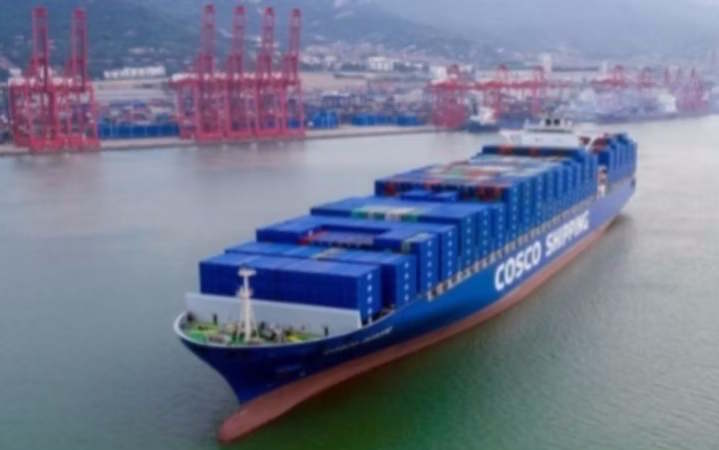
Image: WasteFuel and ITC are targeting the low-carbon shipping market with the proposed new Turkish plant (source: WasteFuel)