
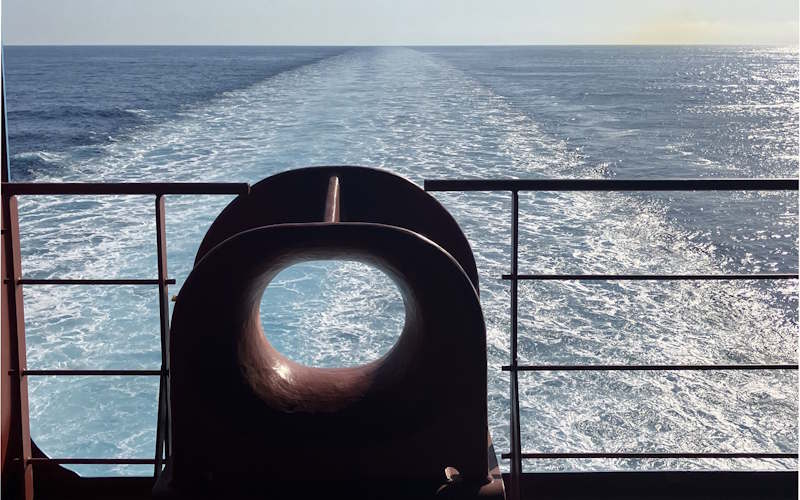
Everllence has announced a new technology called Engine Supported Air Lubrication (ESAL), outlined in a white paper entitled ‘A leap in vessel energy efficiency advancement with engine-supported air lubrication’.
The paper explains why greater energy efficiency is a practical first step in shipping’s transition to net zero. With this transition still evolving, Everllence argues that energy efficiency advancements offer the most reliable route to reducing emissions and costs. It positions ESAL as a practical solution that cuts fuel consumption, lowers regulatory exposure, and improves vessel efficiency by integrating hull air-lubrication with air from the main engine. This is considered to deliver value today, regardless of future fuel or regulatory outcomes.
Bjarne Foldager, Head of Two-Stroke Business, Everllence, said: “The maritime energy transition must begin with reducing energy demand. Solutions that improve efficiency today will retain their value under any credible future framework. Efficiency improvements are therefore not an alternative to the transition of fuel but a prerequisite for making it feasible.”
The system is based on UK company Silverstream’s technology; ESAL being a new configuration of the Silverstream air lubrication system benefiting from integration with the main engine’s scavenge air system.
Noah Silberschmidt, Founder and CEO, Silverstream, said: “At a time when global shipping is looking at practical ways to save fuel, we are proud to have developed a solution that connects our technology to the heart of the ship, its main engine, creating a synergy that further improves fuel efficiency. Silverstream’s air lubrication technology is already delivering proven fuel and emissions savings across the global fleet, and this milestone signals the readiness of a novel engine‑supported configuration to deliver at scale.”
Pending final IMO rules, Everllence believes that ESAL already offers a clear business case. By reducing the fuel consumption of the vessel, it lowers emissions, compliance costs and exposure to fuel-price and regulatory volatility. As such, the fuel savings obtained from ESAL can deliver meaningful long-term economic and environmental benefits across a vessel’s operating life.
Per Cato, SVP, Head of Engineering Two-Stroke, Everllence, added: “Less fuel consumed leads directly to lower absolute emissions, lower compliance costs, and lower exposure to volatility in both fuel prices and regulatory costs. ESAL is therefore not only a technology but a strategic response to uncertainty in the regulatory landscape. We are confident in both the technology and the efficiency improvements delivered by ESAL, having successfully conducted multiple onboard trials across several vessels.”
Everllence concludes that energy efficiency is essential to shipping’s decarbonisation and positions ESAL as a practical, future-proof solution. By integrating air lubrication with the main engine, ESAL improves net efficiency gains by up to 6%, further reducing fuel consumption, emissions, regulatory costs and fuel demand while supporting competitiveness and the transition to net-zero shipping.
Image: Ship wake with ESAL active (source: Everllence)