
According to Jotun, in-water hull cleaning has long been a routine port-side activity with no common rulebook, but this is changing with the new ISO 6319 standard, offering benefits to shipowners, ports, regulators and technology developers alike.
The value of the standard will depend on disciplined application, argue Jotun’s experts in a new paper on the shift from reactive hull cleaning to proactive biofouling management.
Hull fouling starts as a microbial film and grows into slime, then barnacles and tubeworms. Every stage adds drag and drag burns fuel. IMO has put figures on it: slime just 0.5mm thick covering half a hull can raise a ship’s GHG emissions by 20% to 25%, and a light layer of barnacles or tubeworms by up to 55% on an average container ship. Fuel can account for as much as 50% to 60% of a ship’s operating costs, according to the World Shipping Council, depending on ship type and fuel prices. Fouling is also a major route for invasive aquatic species to travel between ports, and for voyages linked to the EU, carbon pricing now puts a cost on a dirty hull as well.
Ships have never lacked ways to clean a hull. What has been missing is consistency. Practices, reporting and permissions have varied from port to port and provider to provider, leaving authorities unable to compare cleaning requests and owners unsure whether cleaning will be accepted.
ISO 6319, published in March 2026, sets out how in-water cleaning should be planned, conducted, documented and reported, for hull and niche areas, for fouling from biofilm to macrofouling, and with or without capture. The authors of Jotun’s paper argue it turns a cleaning event into a traceable, auditable operation.
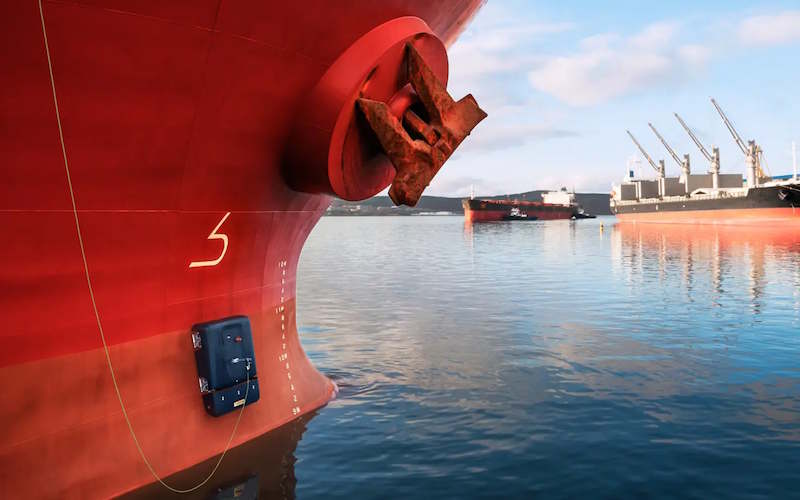
At the heart of the paper is a change of mindset. Reactive cleaning deals with fouling that is already established. Proactive cleaning removes early-stage fouling before macrofouling develops, which means less biomass, gentler cleaning forces and a lower risk of coating damage. Robotic in-water cleaning, the paper suggests, is a timely example of what the standard enables: integrated monitoring, inspection and cleaning that aim to maintain an always clean hull.
Hull cleaning benefits include:
- For shipowners and operators: clarity about the documentation that ports, charterers and class societies will expect, and a way to make hull cleaning part of a documented performance system, with fuel savings, lower emissions and less exposure to carbon pricing as the prize. It also gives owners and charterers a shared factual basis for charter-party performance discussions, easing the split between the party that invests in the hull and the party that pays for the fuel.
- For ports and regulators: standard information makes cleaning requests easier to assess and helps tell low-risk cleaning of early-stage fouling from higher-risk cleaning of macrofouling. ISO 6319 leaves thresholds and performance criteria with local authorities and ports, where they belong, while giving owners and service providers one documentation package that travels from port to port.
- For coating and cleaning technology: consistent records let developers show how cleaning affects coating condition, time to refouling and water quality, moving the industry from broad claims to evidence-based choices.
- For biosecurity: stopping mature macrofouling from building up is a rational way to cut the risk of carrying organisms between regions, and documented early cleaning gives better evidence that a vessel is managing that risk.
- For climate and performance: a clean hull is a decarbonisation lever available to the existing fleet. Used with ISO 19030 performance monitoring, the authors say, cleaning records can be linked to measurable fuel efficiency gains.
Jotun is clear that ISO 6319 does not close every gap. More work is needed to link fouling ratings to actual invasive-species risk, to improve species identification and to gather comparable data on water quality during cleaning. Niche areas remain harder to inspect and clean. And a standard only helps if ports choose to use it and the records are credible.
ISO 6319 marks the point at which in-water hull cleaning stops being an informal port activity and becomes a documented environmental management practice. Jotun emphasises that the opportunity is to use it not only to justify cleaning, but to make a continuously clean hull the normal way ships operate.
The full paper can be read here.
Image: Proactive hull cleaning (source: Jotun)