
The World Shipping Council (WSC) is calling on governments to agree on binding global GHG regulations for international shipping without further delay, warning that continued uncertainty risks slowing investment in cleaner fuels and infrastructure.
As the next round of negotiations get underway at the IMO, WSC has identified three elements it considers essential to an effective agreement that delivers on the commitments governments made under the 2023 GHG Strategy:
- A credible pathway to net zero, with clear and predictable emissions reduction requirements aligned with the IMO’s 2023 GHG strategy’s ambition.
- Strong and consistent enforcement, ensuring the same rules apply to every ship from the first year.
- Incentives for cleaner fuels, helping close the price gap between conventional fuels and zero and near-zero GHG fuels.
The call builds on a joint statement issued by nine major international shipping associations, including WSC, ahead of the IMO negotiations. Representing the global commercial shipping fleet, the associations urged governments to agree on effective and enforceable global regulations that provide investment certainty, incentivise cleaner fuels and maintain a level playing field across international shipping.
For the liner industry specifically, investment is already well underway. Container shipping and vehicle carriers have committed more than US$ 200bn to over 1,350 dual-fuel ships, including over 500 already operating. These investments show the industry’s readiness to transition, but unlocking their full emissions reduction potential depends on the availability and commercial competitiveness of cleaner fuels.
Joe Kramek, WSC President and CEO, said: “Shipping companies are investing billions in ships capable of running on cleaner fuels. We need global rules that give fuel producers and shipowners the confidence to invest in the next stage of the transition. Clear targets, effective enforcement and meaningful incentives for cleaner fuels must work together. An agreement that delivers all three can accelerate progress towards net zero and help turn the investment already underway into real emissions reductions.”
WSC cautions that further delays or a framework focused primarily on experience building or fuel market readiness would prolong uncertainty rather than support the transition. Without a meaningful global framework, shipping risks facing a growing patchwork of national and regional emissions regulations, adding complexity and costs to international trade. Since the IMO’s decision to delay adoption of the global agreement, several national shipping carbon charging schemes have been introduced or advanced, underscoring the urgency of reaching a common global regulation.
Kramek added: “We believe IMO Member States can work together to reach an agreement that delivers on the commitments made in 2023. As an industry, we will be responsible for implementing the rules agreed at the IMO. That’s why we are calling for clear reduction targets, consistent enforcement and meaningful incentives for cleaner fuels. These are the foundations of an effective global framework that can deliver real emissions reductions.”
WSC represents the liner shipping industry, which transports about 60% by value of global seaborne trade.
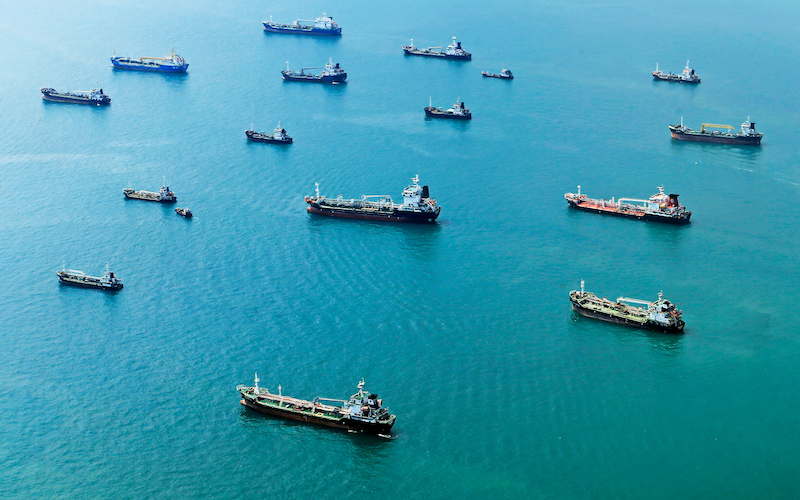
Image: Ships at anchor (source: Jeffrey Surianto/Pexels)