
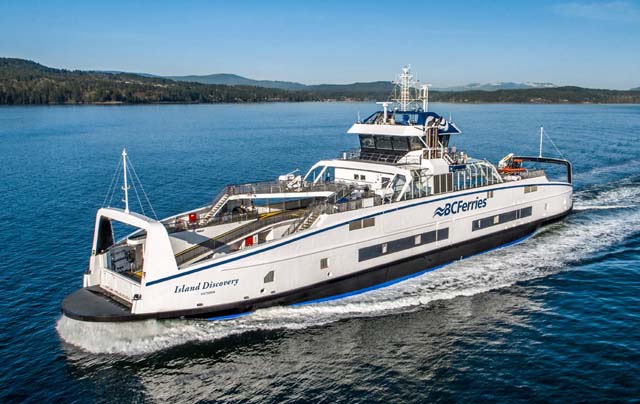
With the major capital expenditure approval by Canada’s BC Ferries Commissioner, BC Ferries is able to take the next step towards the purchase of four new hybrid electric Island Class vessels that will increase capacity across the ferry system.
By 2027, the four new vessels will enter service on the routes connecting Nanaimo Harbour and Gabriola Island (two vessels) and Campbell River and Quadra Island (two vessels), with corresponding electrical upgrades for shore-based rapid charging made to the four terminals on these routes.
Nicolas Jimenez, President and CEO BC Ferries, said: “BC Ferries proposed these four new hybrid Island Class vessels because added capacity is critical to helping us get people where they need to go efficiently and reliably. As the Commissioner has noted in her decision, this project will deliver improved customer service, help lower our costs related to crewing and training, and contribute to safe and reliable service for passengers up and down the coast.”
The Island Class vessels that currently serve the above routes will be able to be redeployed to greatly benefit a number of communities with increased capacity to help address current and future demands. Specifically, the Crofton to Vesuvius route will see capacity increased by 20% along with increased frequency provided by two-vessel service. The Quadra to Cortes route capacity will increase by about 70% through the deployment of a larger vessel, and the existing system relief vessel will be redeployed to the Denman to Hornby route year-round, doubling its capacity and particularly improving travel certainty throughout the year.
The new vessels will create the potential for an additional seasonal capacity increase from Salt Spring (Fulford Harbour) to Swartz Bay. The project also supports having a standby relief vessel in place, which can help maintain service levels during refit periods on all routes serviced by Island Class vessels.
The introduction of these four new vessels will take BC Ferries a step closer toward standardsation of the fleet which can help reduce the number of vessel classes the company operates. This in turn helps with maintenance, refit, training and other operational activities.
The Island Class electrification project will receive funding from the Government of British Columbia through the monetisation of low carbon fuel credits that BC Ferries will earn under the Province’s Renewable and Low Carbon Fuel Requirements Regulation. This project is estimated to reduce emissions by 10,000t CO2e, supporting the Province’s CleanBC goals and bringing BC Ferries closer to its 2030 targets.
BC Ferries will now continue through the procurement process, with negotiations to begin imminently.