
Lloyd’s Register (LR) says it is looking at the impact on the cruise industry of the outcomes of MEPC80 and the inclusion of the maritime sector in the EU Emissions Trading Scheme (ETS) following 2023’s busy year on the regulatory front.
As other segments evaluate engine retrofits and the installation of energy-saving devices, what impact do the interdependencies between cruise stakeholders have in determining effective choices, LR asks, and how is the sector rising to difficult decisions given some of the uncertainties ahead?
There is no questioning of course, the importance of robust, comprehensive and transparent disclosures to drive and support the sustainability agenda for emerging regulatory requirements. According to the Cruise Lines International Association (CLIA), accessibility of funding for sustainable shipbuilding will be key to the sectors’ energy transition ambitions, along with port and shoreside infrastructure to keep the transition a fair and equitable one.
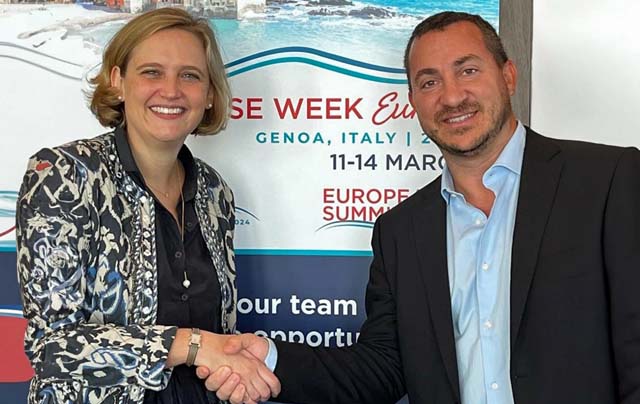
Marie-Caroline Laurent, Director General, Europe, CLIA, said: “Recognising the importance of the cruise value chain for the European maritime industry, it is vital to enable faster access to funding for sustainable shipbuilding and maritime equipment manufacturing to support Europe’s world-leading position. This will require deployment of sustainable maritime fuels and new technologies to help the sector decarbonise. Implementation of the EU Green Deal to support decarbonisation of cruise will need to ensure adequate port infrastructures are in place. Investment in shoreside electricity must be made available and the development, scale-up and availability of sustainable maritime fuels and related infrastructure must be promoted.”
Whilst the goal of achieving net zero GHG emissions by 2050 is being supported by cross supply chain research and development, in order to assess the various pathways to decarbonisation, a single solution has not yet emerged. Achieving net zero will most likely require a combination of different technologies and fuels.
Michele Landro, LR VP and Head of Passenger Ships Segment said: “As cruise lines identify future fuel pathways to move away from fossil fuels, the availability of these alternative fuels will impact how quickly the industry can progress towards a more sustainable future. There is a critical need for governments to invest in the infrastructure necessary to increase availability of bunkering for new fuels at ports around the world and LR is committed to providing support for a regulatory environment that supports the production, distribution, and use of renewable fuels. We will be engaging with key stakeholders from the sector, focussing on the global energy transition, sustainability and other key issues the cruise sector faces in the coming years.”