
Bureau Veritas Marine & Offshore (BV) has completed an independent verification of methane emissions measurements conducted on board four LNG-fuelled vessels operated by Brittany Ferries.
Performed in collaboration with the French authorities, this work supports the establishment of a documented and compliant methane (CH₄) emissions profile, enabling the vessels to report actual measured methane slip values under the European MRV and FuelEU Maritime requirements, instead of relying on the default emission factors set out in current regulations.
The verification work was conducted on the vessels Salamanca , Santona, Saint-Malo, and Guillaume de Normandie. For the Salamanca, the methane emissions monitoring campaign was conducted over a 12-month period on the Rosslare–Bilbao and Rosslare–Cherbourg routes. The results of the atmospheric emissions study were published in the Journal of Marine Science and Engineering.
The findings demonstrate that the vessel’s average annual methane slip rate is largely reduced compared to the default values of up to 3.1% currently referenced in European regulatory frameworks and international guidelines issued by the IMO. These results underline the importance of basing regulatory reporting on measured and verifiable data reflecting real operating conditions.
In accordance with IMO Resolution MEPC.402(83) and the FuelEU Maritime Guidelines, the use of actual methane slip values requires the development of a comprehensive methane emissions documentation package. This documentation package, prepared by the company intending to use actual tank-to-wake methane slip emissions, includes a methane emissions file for each relevant engine, a methane record book, and additional methane slip-related information such as the engine load monitoring (ELM) procedure used for the FuelEU Maritime report. The documentation must be supported by onboard exhaust gas measurements and robust monitoring methodologies.
BV reviewed the documentation required under the above requirements. Following this process, the methane files were approved by the French flag administration, which issued a Form of Statement confirming the engine-weighted verified methane emissions values. This approval enables Brittany Ferries, together with the implementation of the ELM procedure, to report measured methane emissions within the MRV and FuelEU Maritime frameworks.
With maritime transport now included in the EU ETS, and with FuelEU Maritime progressively entering into force, methane slip has become a material parameter in GHG intensity calculations and associated compliance exposure. The ability to substitute conservative default values with verified measured data provides LNG-fuelled ship operators with a transparent and technically robust basis for demonstrating their actual environmental performance.
David Barrow, BV SVP Western Europe and Americas, said: “This collaboration demonstrates how independent measurement and verification can enhance the accuracy of regulatory reporting while reinforcing transparency and accountability in greenhouse gas emissions. By supporting the recognition of measured methane performance, we are helping ensure that the real environmental gains achieved by LNG-fuelled vessels are properly reflected within evolving regulatory frameworks.”
Bertrand Crispils, Head of Energy Transition, Brittany Ferries, added: “The achievement of this work is another key step on our energy transition journey as we look to the future and introduce greener, more energy-efficient vessels and fuels. It clearly shows how technical expertise can allow us to unlock improvements in environmental performance and how flexibility in regulations provides shipowners with the means to find innovative, creative and pragmatic solutions that are beneficial to all. This project was the fruit of great teamwork between scientist, shipowner, certifier, and manufacturer and we thank ESTACA, Bureau Veritas and Wärtsilä for their expertise and active support.”
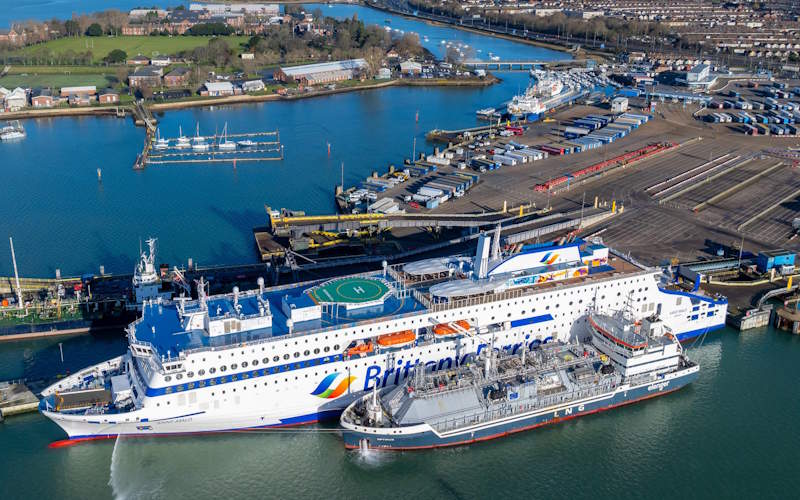
Image: Ro-pax ‘Saint Malo’ bunkering in Portsmouth (credit: Brittany Ferries/BV)