
Sweden’s Chalmers University of Technology has completed a study of various types of antifouling paint, and concluded that the results were the opposite of what many would expect.
Although the study was aimed primarily at the recreational boating industry, the conclusions could be equally interesting to the deep-sea shipping segment.
Seven different antifouling paints were tested:
- five paints with a cuprous oxide content ranging from 6 to 32 weight percent
- one biocide-free silicone paint, achieving a smooth surface to which fouling organisms cannot attach
- one paint that instead of copper contains the biocides tralopyril and zinc pyrithione (not currently available in some states, but in several EU countries it is marketed as safe for the environment).
The so-called ‘antifouling paints’ slowly release toxic substances – biocides – to prevent the organisms from growing on the hull. The paints that dominate the market contain the biocide cuprous oxide and are effective as long as they release copper. However, this has two major disadvantages – it affects other organisms in the environment, and it contaminates the water and bottom sediments.
Of the paints tested, the biocide-free silicone paint was most effective at preventing growth of organisms, and the paint marketed as environmentally friendly turned out to be extremely toxic. The study was conducted in various types of coastal water, and showed that coatings with a low copper content can be just as effective as those containing more copper.
Maria Lagerström, researcher at the Division of Maritime Environmental Science at Chalmers, said: “The goal of our study was to see how the environmental impact of antifouling paints can be reduced, while boat owners get the effect they want.”
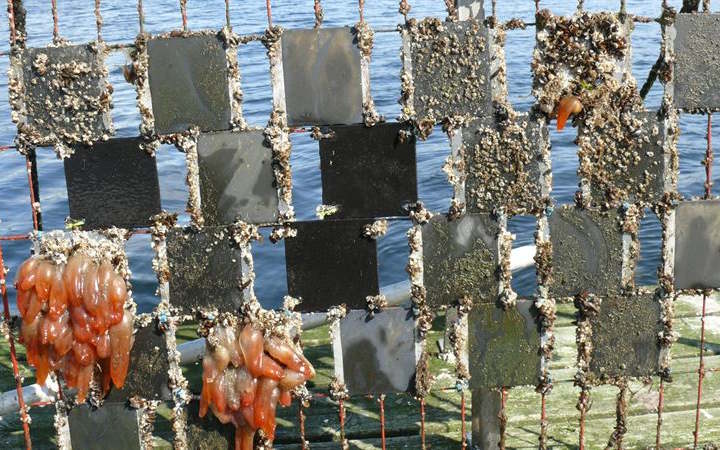
To test the effectiveness, the different paints were applied to panels that were immersed in the water for up to six months in three different coastal waters: Tjärnö in Sweden, Hundested in Denmark and Arcachon Bay in France. The researchers measured both the surface coverage of the fouling on the different paints, and how much biocides were released into the surrounding water. The researchers chose several environments because both the amount of fouling and the organisms that dominate vary between different sea areas.
Although the coastal waters in the different countries differ, all the results pointed in the same direction: the silicone-based biocide-free paint was the most effective, closely followed by the biocide-containing tralopyril paint. For the copper coatings, the copper content in the paint was not a deciding factor, meaning that each of the five copper paints had more or less the same effect against fouling, despite a wide range in their copper content.
The researchers performed two different tests to see how much the paints impact the marine environment. The first was an environmental risk assessment where models were used to assess the levels of biocides that the paints can give rise to in the marine environment, based on how much was released into the water during the test period. The silicone paint was not included here, as it contains no biocides.
According to the test, none of the biocidal paints would meet today’s environmental risk criteria. But one paint clearly stood out – the tralopyril paint, which is marketed as ‘environmentally friendly’.
Lagerström said: “I’ve done this kind of environmental risk model before, but I’ve never seen such high values. The amount of biocide released was several thousand times higher than the acceptable levels, so I’m surprised that this paint is promoted as environmentally safe.”
The second test included all paints, where four different marine species were exposed to leachate solutions from the painted panels in the lab to see how they were affected. In this case, too, it was the paint with tralopyril that fared the worst, followed by the paint with the highest copper content.
Although the EU Biocidal Products Regulation was introduced in 2013, not all products that have applied for authorisation have been fully evaluated. Therefore, during a transitional period, products that were already on the market can continue to be sold, even if they have not passed an environmental risk assessment. In practice, this means that products with potentially high environmental hazards can continue to be used.
Lagerström concluded: “If we sum up the study, we can conclude that the copper-free alternatives were actually more effective than those containing copper – but with very different effects on the environment. The test winner is the silicone paint that has the best sustainability profile because it performed well against fouling while having low toxicity. It requires more prep work and a special underlying coating to get the paint to adhere to the hull, but in our comparison, it looks extremely promising and is worth trying. Using paints with the highest copper content would have an unnecessary environmental impact now that we have shown that it works with lower levels. If we phase them out, it would make a huge difference to the environment in our European coastal waters. And I really can’t see any reason why highly toxic products like the tralopyril paint should be allowed on the market in any European country at all.
Image: Hull coating test panels (source: Chalmers University)