
According to UK company SodaFlexx, wet scrubber exhaust gas cleaning technology contributes to ocean acidification and pollution; and to overcome this SodaFlexx has created a method of treating exhaust gas emissions from ships with sodium bicarbonate powder.
The system is adapted from proven land-based technology, where sodium bicarbonate powder is injected directly into the exhaust gas stream to neutralise sulphur compounds. A chemical reaction converts SOx to a highly stable and non-toxic salt, sodium sulphate which is either released safely into the atmosphere or can be captured by SodaFlexx’s bespoke cyclone particulate capture hybrid system and recycled ashore.
The absorbent handling and dosing equipment design is based on long experience in dry powder handling and ensures that the system doses optimally and safely for the required emissions zone. There are no special construction standards for handling sodium bicarbonate, so no high-alloy steel or other special materials are required, and all non-proprietary components are off-the-shelf equipment selected for low maintenance in operation. This is said to make for a highly cost-effective system, with 4-6 months between signed contract and sulphur-free emissions.
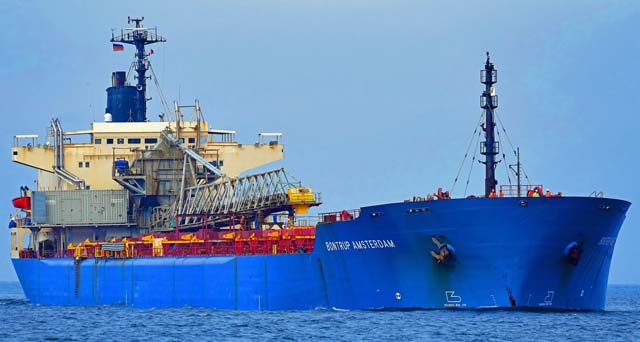
The application is currently in the process of obtaining a US patent, and SodaFlexx is now trialling new technology adapting its proven powder delivery systems to treat and handle CO2 from marine engines. Scale tests have shown promising results, and a shipboard installation is planned for Q1 2023. Earlier in 2022 SodaFlexx was contracted for the installation of a dry exhaust gas cleaning system on the 65,402 dwt Bontrup Amsterdam (pictured), following successful trials on the 96,772 dwt Yeoman Bridge.
Barry Bednar, SodaFlexx CEO said: “With the maritime industry heavily dependent on oil prices, ship owners are looking for an effective and reliable solution to allow burning of HSFO rather than much more expensive MGO or VLSFO. Burning HSFO with an exhaust gas cleaning system has proven to be less CO2 intensive than using MGO or VLSFO on a ‘well to wake’ basis, and as most engines were designed to burn HFO, maintenance and lubrication protocols are as intended. SodaFlexx provides innovative solutions that are attractive from both economic and environmental perspectives, and we feel that during the transition to alternative fuels, there is still a need to operate the existing fleet in the most sustainable way possible. We are committed to the environment and the sustainable future of the maritime industry.” .
Additionally, SodaFlexx is presently trialling a Carbon Capture System that is claimed to change the way CO2 is captured and treated aboard ocean-going vessels.