
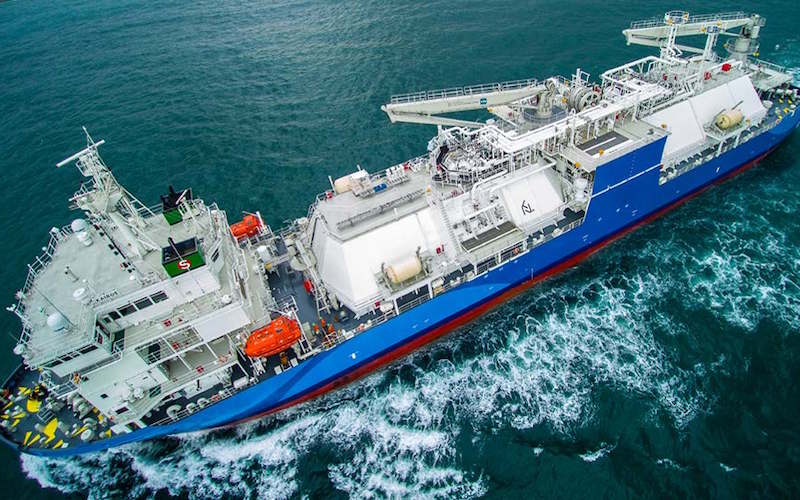
Industry collective Sea-LNG has produced a new case study, in association with member company Bernhard Schulte Shipmanagement focusing on people, training and safe operations during nine years of LNG bunkering experience.
When BSM took the vessel Kairos into management in 2018, there were only nine LNG bunker vessels globally. The market was new, and the pool of experienced seafarers was tiny. Eight years on, BSM’s experience offers a practical lesson for crewing and bunkering vessels that run on alternative fuels.
From the latest Sea-LNG/BSM case study, five lessons are thought to stand out:
- Start with the nearest competence: BSM’s answer to the skills gap was an LPG-to-LNG bridging programme. LPG is the closest experience base to LNG, and the international rules on seafarer certification refer simply to ‘gas’. BSM recruited LPG-experienced crew from its own fleet and then built a mandatory course covering differences in handling, pressure, and simultaneous operations. It remains BSM’s main recruitment route today.
- Take manoeuvrability seriously: BSM expected cargo handling to be the hardest part. LNG is stored at around -162°C. In practice, ship handling proved the bigger test. Bunker vessels are almost always alongside, working in tight port waters close to much larger ships. The Kairos uses azimuth thrusters that rotate through a full 360 degrees. For masters used to a rudder and propeller, the logic is close to the reverse of what they know. BSM drew on its offshore experience to write a dedicated manoeuvring manual. Officers must complete set scenarios, signed off by the master, before handling the vessel alone.
- Prepare crew for the reality: a busy bunker vessel may deliver fuel almost every day. Each operation means manoeuvring, connecting, transferring, disconnecting and paperwork. BSM successfully argued for an additional navigational watch officer, so the chief officer can focus on cargo operations. It now treats this as the standard for safe operations.
- Invest in retention: crew who adapt to the role tend to stay. Senior officers find the work skilled and engaging. Bringing a bunker vessel alongside a cruise ship is not a job everyone gets to do. Stable, returning teams protect knowledge that is costly to rebuild.
- Raise standards on both sides: Every bunkering operation involves two ships. Crews’ knowledge levels often diverge depending on the operating profile and vessel segment. BSM’s bunker crews sometimes find themselves taking the lead. Pre-transfer meetings and checklists help, but they cannot replace practical experience. As BSM puts it: “The safety of an LNG bunkering operation is only as strong as the least-prepared crew involved.”
BSM’s experience shows the journey LNG has taken to become a practical, realistic fuel for the global maritime industry. Yet, as the case study articulates, its success as a fuel depends on people. Today, we need to build on what crews already know. Train for the ship and the cargo. Keep good teams together. Hold both sides of the transfer to the same standard. These lessons were learned with LNG, but they apply to any new alternative fuel.
The full study can be downloaded here.
Image: LNG bunker vessel ‘Kairos’ (source: Sea-LNG)