
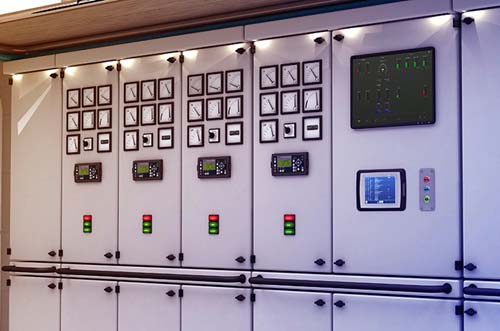
Dutch company RH Marine has added functionality to its Rhodium Energy Management System (EMS) that allows the use of recovered waste heat from the diesel generators on board to reduce running costs and operating hours, savings energy consumption and making ships more sustainable.
The extra functionality optimises onboard energy generation. RH Marine installed its first Rhodium EMS in 2012 on a hybrid ferry and after that other vessels followed. The system drives all hybrid energy sources on board as optimally as possible, both diesel generators and batteries. By combining batteries with the Rhodium EMS, it becomes possible to optimise electrical energy generation. This reduces the number of starts of the diesel generators. The Rhodium EMS ensures fuel savings and reduction of operating hours.
In addition to electricity, heat is required on board, for such purposes as accommodation, or preheating the diesel generators. The conversion of diesel oil into electricity and then heat is very inefficient.
Martijn Wittingen, Consultant, RH Marine, said: “About 35% of the energy from diesel oil is converted into electricity, the rest is converted into heat. The heat can be collected with a heat recovery installation in the exhaust system of the diesel generators. The new functionality of the Rhodium EMS matches the heat supply with the heat demand. This way, it prevents the electric heaters from being started up, saving electricity and fuel. The system is also used to prevent an imbalance in electricity generation.”
The Rhodium EMS monitors which diesel generators are linked to the heat recovery installation. As a result, the heat demand is still matched to the heat supply, even if a diesel generator is not equipped with an economiser or when it is unavailable. The new functionality of the Rhodium EMS has an intelligent link with the Rhodium Power Management System (PMS). In this way, the systems inform each other of the optimal starting order of the diesel generators and can also act when diesel generators do not provide usable heat.
The first installation of this optimisation algorithm will on a superyacht, though the technology can be applied to all vessels with diesel generators, batteries and a heat recovery installation in the exhaust system on board. With the new EMS functionality, operators can precisely see how much heat is being recovered and how much energy the system saves on the intuitive control screens.