
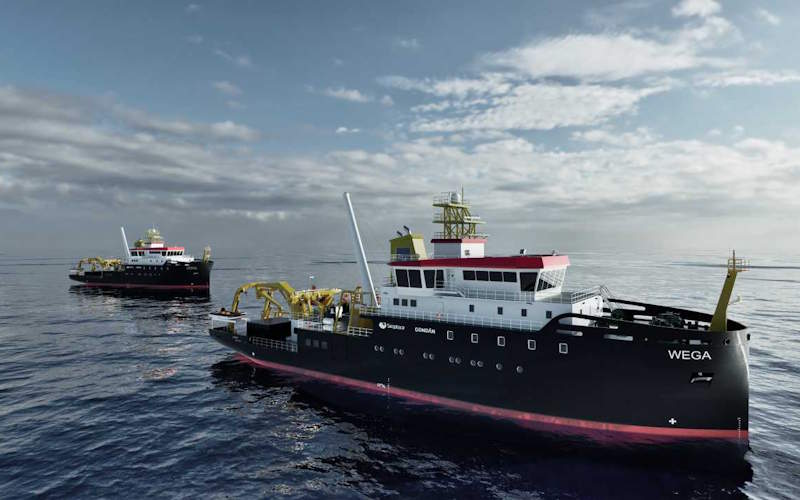
Spanish shipyard Astilleros Gondan has been awarded the contract to build two new research vessels commissioned by the Bundesamt für Seeschifffahrt und Hydrographie (BSH), the federal agency responsible for maritime safety and nautical cartography in Germany.
The project, which includes the construction of the new Wega and Deneb, is part of the German government’s plan to modernise its research fleet and ensure continuous operations in the North Sea and Baltic Sea.
Designed in collaboration with Seaplace Engineering, with a length of around 70m and a beam of 15m, the vessels will incorporate a high-efficiency propulsion system designed to use green methanol and certified with the ‘Blue Angel’ environmental label, which translates into a significant reduction in emissions and a lower climate impact. They will comply with DNV’s ‘Silent-R’ standard, with low-noise operation that protects marine wildlife and allows for accurate acoustic measurements, and will feature DP and the latest hydrographic equipment—including the use of underwater and autonomous vehicles—to investigate underwater obstacles, perform complex underwater work, and collect oceanographic data critical to navigation, marine protection, and Germany’s defence capabilities.
The shipyard was awarded the order after a three-year tender process. It will undertake the construction of these vessels applying the highest standards of engineering, sustainability, and energy efficiency, ensuring technical development that is fully aligned with BSH requirements. According to the yard, this award, in addition to strengthening GONDAN’s workload for the coming years, confirms the confidence of European administrations and public bodies in its industrial capacity, operational reliability, and construction excellence.
Image: Gondan is to build two low-carbon hydrographic vessels for Germany (source: Astilleros Gondan)