
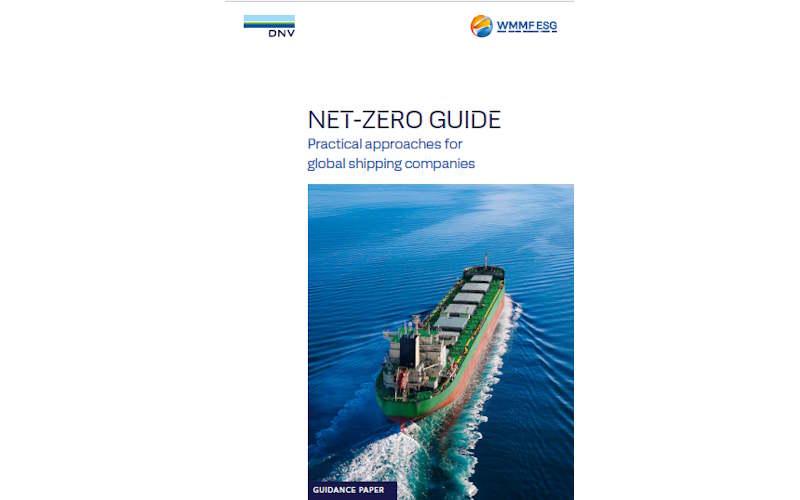
According to DNV, the maritime industry is experiencing a period of significant transformation, driven by rapidly evolving regulations, increasing commercial pressure, and a global shift towards reducing GHG emissions.
In response, DNV and the World Maritime Merchants Forum (WMMF) ESG team have published a new guide to help shipowners navigate these evolving challenges, an effort supported by industry organisations in Hong Kong and worldwide.
The Net-Zero Guide: Practical Approaches for Global Shipping Companies provides a structured roadmap for advancing decarbonisation. Drawing on data-driven insights and real-world operator experience, the guide offers actionable steps for shipowners to align operational and investment decisions with both international and regional regulations. It helps companies navigate uncertainties, adopt best practices, and take pragmatic actions that prepare them for future changes in a rapidly evolving landscape.
Knut Ørbeck-Nilssen, CEO, DNV Maritime, said: “Shipping’s decarbonisation journey continues despite the postponement at the IMO. The reality is that energy efficiency and fuel flexibility or readiness are still considered and implemented on vessels. Continuing on this course will maintain competitiveness and contribute to the sector’s long-term decarbonisation goals. The collaboration with World Maritime Merchants Forum on this guide is itself a testament to the importance of working together to pave the way for successful decarbonisation.”
Wang Yong Xin, President, China Merchants Energy Shipping (CMES), said: “The Net-Zero Guide offers the industry a wealth of practical reference cases in a complex transition environment, helping shipping companies strike a balance between short-term operations and long-term emissions reduction.”
The guide addresses the increasing complexity and cost of compliance, especially for small and medium enterprises (SMEs), and outlines procedures to manage costs while supporting the transition of fleets toward net-zero emissions. It also sets out cost-effective actions, such as energy-efficiency upgrades, phased fuel transitions, and targeted fleet renewal or retrofits, to control expenses and avoid stranded assets. By aligning investments with operational improvements and market expectations, shipowners can strengthen their commercial resilience and position themselves for long-term success.
Shipowners are urged to embed decarbonisation into their core business strategies. This includes linking compliance with fleet investment and financing, while adopting a lifecycle approach to fleet management that balances renewal, retrofits, and operational optimisation. Structured competence development and robust change management are essential to building organisational capability and supporting sustainable growth. DNV says that by leveraging partnerships across the value chain and investing in digitalisation and data governance, companies can enhance transparency, ensure regulatory compliance, and unlock long-term efficiencies.
The guide can be downloaded here.