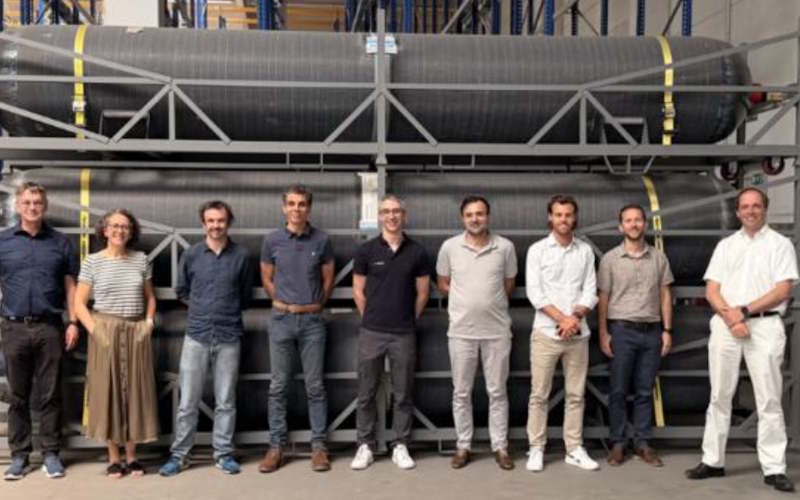
Bureau Veritas Marine & Offshore (BV) recently joined representatives from the French Directorate General for Maritime Affairs, Fisheries and Aquaculture (DGAMPA) for a technical workshop dedicated to hydrogen integration in maritime applications, hosted by Argo-Anleg in Wesel, Germany.
The workshop brought together industry, regulatory and classification experts to exchange views on the technical and regulatory challenges of deploying hydrogen at sea. The programme included a tour of Argo-Anleg’s production facilities, showcasing integrated drilled block assemblies, the H2tanktainer, mobile hydrogen refuelling stations, onboard hydrogen storage systems under assembly and hydrogen test benches. Argo-Anleg presented its maritime projects, highlighting system architecture, component operating principles and the process safety and approval approaches supporting their development.
A key conclusion from the discussions was that successful maritime hydrogen projects require more than innovative technology. Early regulatory engagement, robust system engineering, safety demonstration, testing and crew preparedness are all essential to support safe and scalable deployment.
Participants emphasised the importance of engaging with the flag administration from the outset of a project to establish the appropriate approval pathway. Early dialogue helps define the applicable regulatory framework, clarify expectations for safety assessments and documentation, and determine the respective roles of the flag administration and the classification society before key design decisions are finalised.
The workshop explored the concept of essential systems and the associated implications for documentation, redundancy and compliance demonstration. Discussions covered the value of type approval certification (TAC) in supporting innovative hydrogen equipment, the importance of crew training for the operation and maintenance of hydrogen systems, and the influence of installation arrangements and operational conditions on onboard safety. Participants reviewed ongoing developments at IMO and the evolution of the IGF Code, highlighting the need for continued collaboration to support the certification of hydrogen technologies as the regulatory framework evolves.
The workshop concluded by identifying opportunities for further cooperation on approval pathways, certification activities and knowledge sharing. BV says it has been actively supporting the development of hydrogen-powered maritime applications through the certification of hydrogen-related equipment and the classification of vessels using hydrogen for onboard power generation, whether for onboard electrical services and auxiliary systems or for propulsion. Through its work with technology developers, shipowners, shipyards and regulatory authorities, BV contributes its experience in safety assessment, classification and certification to help enable the safe and scalable deployment of hydrogen technologies across the maritime sector.
Image: BV Hydrogen workshop in Germany (source: Bureau Veritas)