
According to voyage optimisation company StormGeo, digital tools for automated routing have been a game-changer for shipping by enabling shorter voyage times and enhanced fuel efficiency to cut costs and emissions, but, with the complexity of modern shipping, the most profitable route is rarely the shortest.
Traditional routing has focused on finding the safest route with the most practical combination of time and distance, and this balancing act is the foundation of voyage optimisation, according to StormGeo.
Commercial Lead Routing Rolf Reksten said: “The shortest route is not necessarily the shortest time – and time is money. In today’s complex operating environment, it is important to take into consideration the whole picture to achieve the right voyage outcome.”
Routing is no longer purely a navigational decision – it’s a commercial one, influenced by fuel costs, port dynamics and fluctuating market conditions. Optimal voyage planning therefore depends on being able to properly evaluate a wide range of shifting parameters and adapt effectively to fluctuating conditions during the voyage through assimilation of real-time data, according to Reksten.
Reksten added: “Routing decisions must reflect multiple operational and commercial variables to focus on value, not just distance.”
An industry shift is thought to be taking place towards holistic voyage intelligence that integrates weather, vessel performance, and commercial data to manage this complexity and support better, faster and more responsive decision-making at sea. AI-driven predictive analytics, combined with human expertise, enables operators to evaluate multiple voyage scenarios through a commercial lens and choose the one that delivers maximum value, rather than just minimising miles.
Voyage routing decisions must consider an expanding set of variables that can have direct commercial implications. Among the primary factors are fuel consumption and costs – with fuel as the largest variable cost that is affected by speed decisions and routing – and weather and ocean conditions that impact speed, fuel burn and safety, as well as leading to potential schedule delays.
Port congestion and arrival timing are also critical as early arrival may lead to idle time waiting at anchor, while late arrival may result in missed laycan/Notice of Readiness windows. In addition, there is cost exposure from carbon pricing and emissions reporting with environmental regulation, as well as canal and transit costs that must be evaluated versus longer alternative routes.
Consequently, small routing decisions can affect fuel costs, ETA, emissions exposure and contractual obligations.
Reksten continued: “The ETA at the next port is the primary commercial driver – whether it’s a bunkering, load or discharge port. Contractual obligations around those ETAs determine which route options are actually viable.”
Hidden costs can arise when optimising solely on the basis of distance and fuel efficiency that unintentionally reduce voyage profitability. This can occur, for example, if the shortest route through heavy weather increases fuel consumption and delays arrival; faster transit to port results in days waiting at anchorage; or slower routing to save fuel leads to missing a cargo delivery window, or other time loss relates to the contractual obligations.
Every routing decision involves operational trade-offs and understanding the total commercial impact is key to balancing these competing objectives for optimal decision-making. This requires transparency around fuel cost and schedule reliability when making decisions on speed versus fuel consumption, and being able to evaluate time savings versus fuel and safety risk when opting for the shortest route over weather avoidance.
Another typical trade-off is early arrival versus just-in-time arrival that has implications for idle time and schedule flexibility. Just-in-time arrivals would optimise port turnarounds and avoid the ‘rush-to-wait’ prevalent in liner trades that results in increased fuel burn from lying at anchorage.
Reksten said: “Shipping is still governed by the concept of ‘first come, first served’. If we want true just in time arrivals, we have to solve who pays for the time that’s lost by slow steaming and move away from that mindset.”
Balancing operational efficiency with desired financial outcomes requires visibility of the different variables that govern a voyage to ensure profitability, as well as safety and sustainability. Manual inputs are important too; client information on crew changes or delays due to supplies – as well as having human experts in the loop to underpin reliable decision-making by accounting for various risks, rather than relying solely on AI automation. This is especially relevant with geopolitical instability that can lead to unpredictable shifts in trading patterns.
Reksten added: “The real challenge isn’t choosing a route – it’s having the right information to evaluate all the commercial implications behind that choice. Algorithms can work quickly and do everything right according to how they are trained, but they’re not able to assimilate risk. A human might say: this other route takes six hours longer and burns more fuel, but the risk on that voyage is much smaller – and therefore it’s more sensible.”
Integrated voyage intelligence offers the opportunity to capture greater fleet-wide value through small improvements in routing decisions that can result in lower overall fuel consumption, reduced emissions and regulatory exposure, improved schedule reliability and less time-loss risk – all of which can add up to substantial financial gains.
Operating a vessel differently to achieve a better net result from the voyage can also offset losses from potential performance claims under charter-party warranties that have become increasingly difficult to recover, according to Reksten. And he believes that, in an increasingly cost-sensitive industry, operators that align routing decisions with commercial objectives will outperform those who focus solely on operational metrics for voyage optimization.
Reksten concluded: “Smarter decision-making is the route to more profitable voyages.”
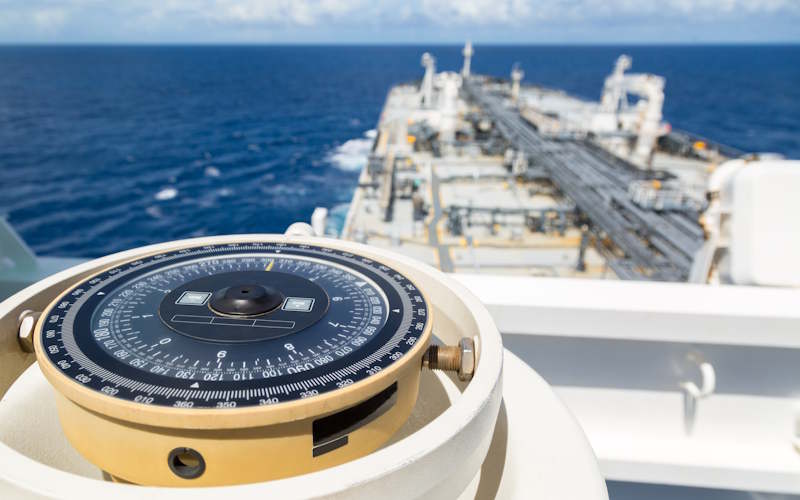
Image: Voyage intelligence is playing an increasing role in ship routing decisions (credit: Shutterstock)