
DNV reports that the 12th session of the IMO Sub-Committee on Ship Systems and Equipment (SSE 12) took place from 9 to 13 March 2026, and progressed various fire safety measures, including agreement to develop interim guidelines for the safety of ships using alternative fuels and battery energy storage systems, supporting efforts to reduce GHG emissions from ships.
The IMO Maritime Safety Committee (MSC) has considered potential alternative fuels and new technologies to support the reduction of GHG emissions from ships and, from a safety perspective, has identified safety obstacles, barriers and gaps in the current IMO instruments that may hinder their use. Related recommendations to support the possible safe use of these new fuels and technologies have been assigned to the relevant Sub-Committees. SSE 12 considered the recommendations from MSC 110 and prepared work plans for the development of a safety regulatory framework to support the safe uptake of new technologies and alternative fuels.
SSE 12 agreed to initiate the development of technology-neutral and goal-based interim guidelines for the safety of ships using battery energy storage systems. The work will continue in a Correspondence Group, which will submit its report to the Sub-Committee on Ship Design and Construction (SDC 13) in May 2027, noting that SDC has already been tasked to draft amendments to SOLAS Regulation II-1/41 to allow batteries to be used as the main source of electrical power and for lighting systems. The work is targeted for completion in 2028.
For ships using methyl/ethyl alcohol as fuel, draft amendments to the FSS Code are to include test provisions for alcohol fires. Any such draft amendments are targeting entry into force on 1 January 2032.
Draft amendments to SOLAS Chapter II-2 and the Guidelines for measures to prevent fires in engine-rooms and cargo pump-rooms (MSC.1/Circ.1321) will be progressed to include safety provisions addressing the risk posed by Fischer-Topsch (FT) diesel fuel, targeted at entry into force on 1 January 2036.
Interim guidelines will be developed on safety requirements for advanced waste heat recovery systems, with the new interim guidelines are targeting approval by 2030.
The work plan for battery energy storage systems will be submitted to MSC 111 (May 2026) for endorsement, while the work plan for the remaining technologies will be submitted to MSC 112 (December 2026).
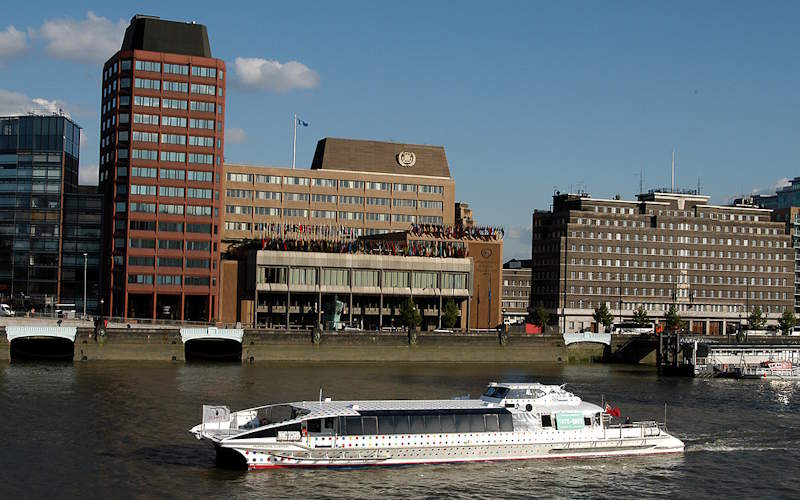
Image: IMO HQ (source: IMO)