
Interferry, the global trade association for the ferry industry, is requesting an immediate halt to the further phasing-in of the EU Emissions Trading System (ETS) for the maritime sector.
The demand follows the recent decision to continue exempting road transport from a parallel ETS mechanism and the lack of clear regulations on the distribution of the funds collected. Interferry is calling for an immediate halt on the further implementation of the EU ETS for the ferry sector, maintaining the surrendering obligation for maritime emissions frozen at the 70% level scheduled for 2025, and halting the planned increase to 100% in 2026.
Mike Corrigan, CEO Interferry, said: “This action must remain in place until road transport is also in an ETS and funds collected are actually ringfenced for maritime decarbonisation. The EU must deliver on its promise of a level playing field and ensure its climate policy supports, rather than financially drains, its most forward-looking transport sector.”
Ferry services are considered critically important to Europe, with more than half of the world’s gross ro-ro and passenger ship tonnage operating in European waters, transporting 400m passengers and 200m vehicles and freight units every year within the EU, significantly offloading the road network. Every euro of freight rate increase on ferries is thought to risk pushing freight volumes back to the already congested European road networks. Interferry supports decarbonisation of the maritime industry and accepted the EU ETS on the clear understanding that funds collected would actually be used for decarbonisation and that road transport would soon be included. The EU Council recently decided to postpone the inclusion of road transport – raising significant concerns in the short sea shipping sector as to why end users of maritime transports, e.g. island communities, have to carry the full costs of ETS.
Johan Roos, Interferry Director Regulatory Affairs, said: “This exemption of road transport from the EU ETS creates an immediate, severe competitive disadvantage for ro-ro and passenger ferries. As it stands now, ETS creates an adverse incentive, pushing goods and passengers back onto already congested road networks due to higher ferry costs. This directly contradicts the long-standing EU policy of modal shift from road to sea.”
In October 2025 the IMO postponed the adoption of a global GHG pricing mechanism for at least 12 months – a framework that was intended to replace the EU ETS and would have set clear guidelines for the use of the funds collected. Meanwhile, Interferry members operating to and from EU ports are taxed for their CO2 emissions without a clear provision on how the money is reinvested to mitigate GHG emissions, and without certainty when a global IMO regulation will come into force – if at all.
Roos added: “The EU ETS is taxing intra-EU ferry transport by approximately €1bn per year, while we need support for production of e-fuels and substantial investments in electrification of EU ports for the benefit of charging electric-propulsion ships. Instead, the vast majority of these revenues are being diverted to national Member State budgets. This approach neither promotes competitivity nor cohesion and hinders the industry’s ability to invest in cleaner technologies.”
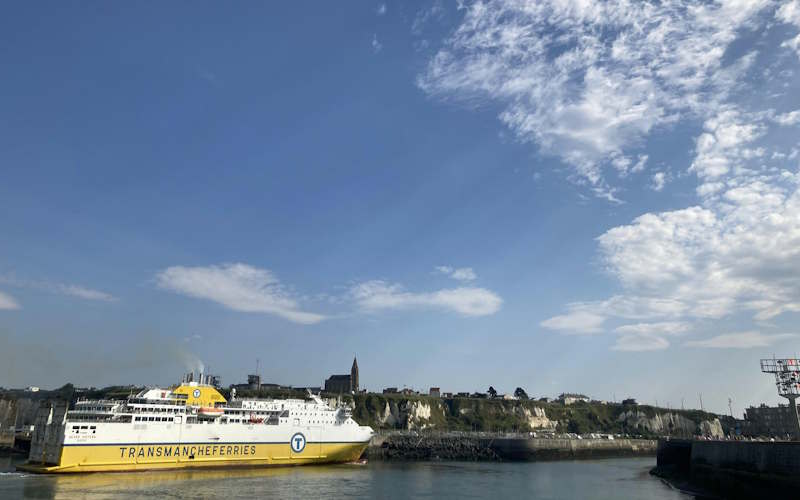
Image: Ferry at Dieppe, France (credit: Becky Miller, Unsplash)