The Maritime Just Transition Task Force (MJTTF) has released frameworks designed to facilitate the development of training programmes for seafarers for working on ships powered by ammonia, methanol and hydrogen.
The training frameworks address the needs of seafarers in entry-level or operational roles as well as senior officers. They are accompanied by comprehensive instructor handbooks. MJTTF intends to release guidelines for general familiarisation programmes, aimed at seafarers and key shore-based personnel, who are not specifically covered by the1978 STCW Convention.
The publicly available MJTTF training frameworks are designed to help regulators and maritime administrations set the criteria for the development of training programmes and the establishment of certification schemes and competency validation mechanisms for seafarers, including classroom education, simulation-based performance assessments and sea-time training.
Maritime education and training institutions will be able to adapt curricula and upgrade delivery models. Shipping companies will receive support in personnel onboarding and safety management system updates to address the unique risks associated with the new molecules.
Both the frameworks and the familiarisation guidelines stem from the Baseline Training Frameworks for Seafarers in Decarbonisation Project; a joint project between the MJTTF and the IMO Secretariat, in collaboration with Lloyd’s Register (LR), delivering work through the Lloyd’s Register Maritime Decarbonisation Hub (the Decarb Hub) and the World Maritime University (WMU), who acted as technical and academic leads respectively. The project is co-funded by the IMO through its integrated technical cooperation programme, and Lloyd’s Register Foundation.
The project has worked in parallel with IMO’s review of the 1978 STCW Convention and Code. Its outcomes, in particular in defining the knowledge, understanding and proficiency required for seafarers in decarbonisation, serve as input to the review process, including through submissions to the IMO Sub-Committee on Human Element, Training and Watchkeeping.
The MJTTF and project partners collectively acknowledge IMO’s work in shaping a harmonised global training regime for seafarers on ships powered by alternative fuels and new technologies. The development of the MJTTF training frameworks has been made possible through invaluable contributions from industry partners and experts.
The initiative has been launched as part of LR’s Maritime Human Capital Management Forum, which highlights the human element, safety, training, and just transition principles for shipping’s energy transition towards net-zero. Publication of the training frameworks is seen as not only a launch, but an invitation to use the frameworks, to build on them, to share them widely, and to ensure they become part of how the industry trains and prepares for the fuels of the future.
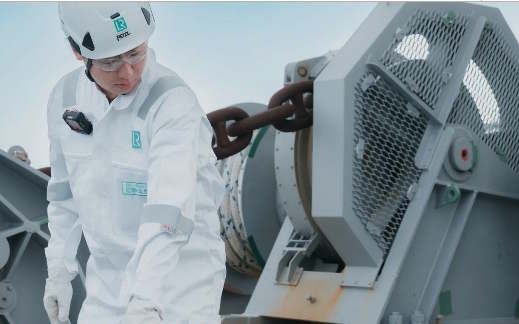
Image: MJTTF is launching new seafarer training guidelines (credit: MJTTF/Lloyd’s Register/Mitsui OSK Lines)