
Japanese ship operator Nippon Yusen Kabushiki Kaisha (NYK), has jointly developed an AI-based system with MTI and Grid that automates and optimises the allocation plan of car carriers, which NYK says will lead to significant reduction in GHG emissions.
NYK operates more than 100 PCTC ships, thought to represent the largest fleet in the world. Historically, ship allocation planning has been an extremely complex and labour-intensive process, requiring comprehensive evaluation of numerous conditions for hundreds of voyages several months in advance.
To overcome these issues, NYK and its partners sought to develop a system designed to enhance planning accuracy and efficiency by organising and structuring the data and decision-making factors involved in shipping and scheduling. The system uses AI to generate an optimal plan within about 10 minutes after evaluating millions of potential shipping schedules for several months ahead. The system analyses numerous factors — including customer requirements, fleet operating status and repair schedules, and port congestion risks — to optimise KPIs such as vessel utilisation, transport efficiency, and transport costs.
Additionally, by integrating considerations for the effective use of next-generation fuel ships and carbon pricing, the system is expected to reduce GHG emissions, thereby contributing to both economic efficiency and environmental sustainability.
NYK, MTI, and Grid remain committed to driving further advancement and efficiency in car carrier operations. The joint efforts aim to foster technological innovation and environmental responsiveness, thereby contributing to sustainability.
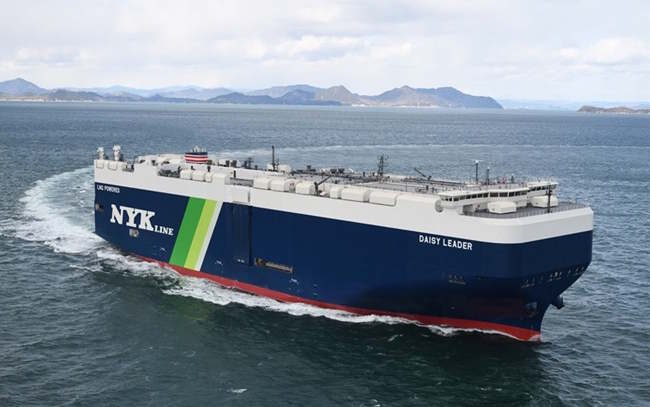
Image: NYK-operated PCTC ‘Daisy Leader’ (source: NYK)