
Haropa Port (Le Havre. Rouen and Paris), Zhejiang Provincial Seaport Group, Bureau Veritas Marine & Offshore (BV), China Waterborne Transport Research Institute, Mediterranean Shipping Company (MSC) and Terminal Investment Limited (TiL) have recently signed a strategic agreement launching the creation of the first green shipping corridor between France and China.
This initiative aligns with the IMO 2023 strategy for achieving carbon neutrality by or around 2050, the Paris Agreement (COP21), the United Nations 2030 Agenda for Sustainable Development, the Franco-Chinese initiative for a green and low-carbon maritime industry, as well as the Clydebank Declaration, of which France is a signatory.
China is Haropa Port’s leading trading partner, accounting for 30% of its container traffic. Ningbo Zhoushan Port, the largest port by total cargo tonnage and the third largest in terms of container throughput, represents 22% of this volume. Given the high level of trade between the two ports, this green corridor is expected to contribute significantly to the decarbonisation of maritime transport.
The strategic agreement will provide opportunities for:
- the deployment of shore-side electricity connections for vessels,
- the progressive electrification of terminals and port equipment using renewable or low-carbon energy sources,
- the establishment of supply chains for alternative fuels (such as LNG, bio-LNG, , green ammonia, and green hydrogen),
- the development of low-carbon hinterland connections, particularly via inland waterway and rail transport,
- the exploration of implementation of on-board CCUS (carbon capture, utilisation and storage) pilot projects.
Benoît Rochet, Haropa Port CEO. said: “As France’s leading port for international trade and a strategic gateway for Asia–Europe flows, Haropa Port carries a key responsibility in driving the maritime energy transition. With this corridor, we are laying the foundations for a decarbonised sea route between China and France. Our ambition is to make the Seine Axis a benchmark hub for the bunkering and operation of zero-emission vessels, in close cooperation with our Asian and European partners.”
Tao Chengbo, Chairman, Zhejiang Provincial Seaport Group and Ningbo Zhoushan Port Group, added: “As a major large-scale, comprehensive hub port in China, the Ningbo Zhoushan Port will actively participate in the cooperative practices of green shipping corridors. We are committed to continuously enhancing our green transformation and service standards, working hand in hand with partners across the value chain to promote the sustainable development of ports and shipping.”
Matthieu de Tugny, EVP, Industrials and Commodities, BV, said: “As a core technical partner, BV will provide technical support for corridor development and emissions reduction. It will work with stakeholders to advance the corridor from initiative to implementation through certification and innovative solutions. This corridor will model international cooperation in green shipping, aligning with climate goals and enhancing China-Europe maritime ties. Bureau Veritas is dedicated to helping turn this vision into reality by supporting the entire value chain.”
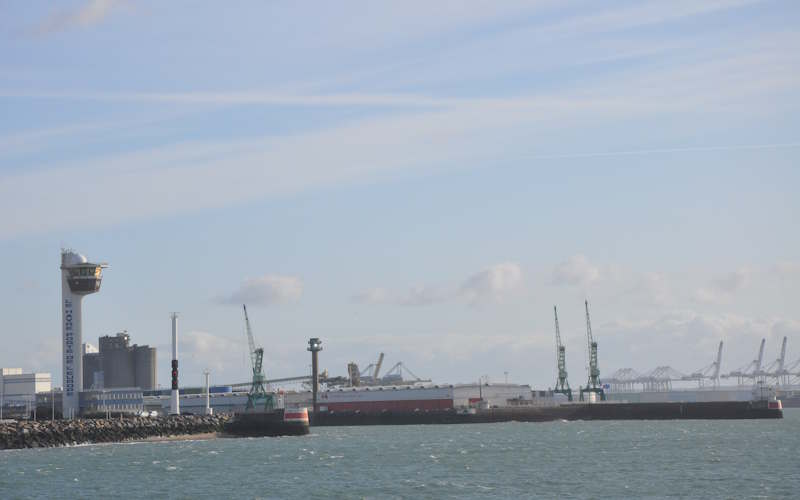
Image: Haropa Port (credit: Philippe Alès, Wikimedia Commons)