
According to CIMAC (the International Council on Combustion Engines), IMO has taken a decisive step to reach the goal of a climate-neutral maritime industry by 2050, though the availability of alternative fuels must be improved.
With IMO’s Greenhouse Gas Strategy now adopted by the organisation’s Environmental Protection Committee, the regulatory strategy now includes reduction targets for greenhouse gas emissions until 2030 and 2040 and establishes quotas for the introduction of zero or near-zero GHG emitting technologies, fuels, and/or energy sources. With these measures, says CIMAC, the maritime industry can make a major contribution to reaching the goals of the Paris climate agreement when the measures supposed are being adopted by 2025 and in force by 2027.
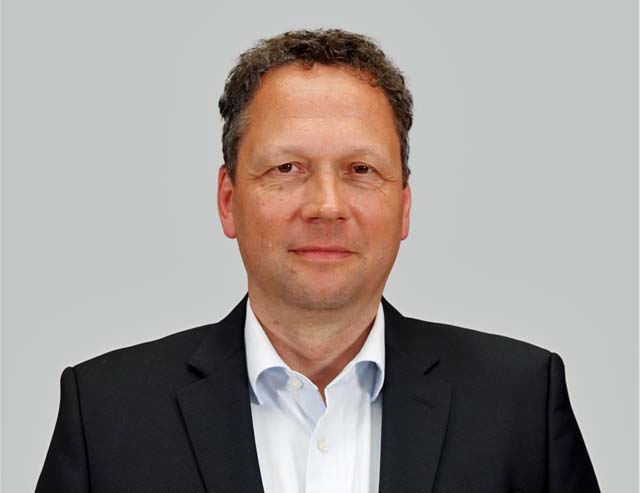
Dirk Bergmann (Accelleron- pictured), chairman CIMAC Greenhouse Gas Strategy Group, said: “With IMO’s Greenhouse Gas Strategy 2023, we now have the necessary framework for the maritime industry and our efforts to contribute to ongoing global endeavour to mitigate climate change and keep the Paris Agreement’s 1.5°C target within reach. The different interests and development levels of the global community have been taken into account. That is positive.”
Dr Daniel Chatterjee (Rolls Royce Solutions), CIMAC VP Decarbonisation, said: “The adoption of the strategy is all in all an important step for the maritime industry as a whole, even though the details still need to be defined. The IMO decision helps maintaining course to emission zero.”
CIMAC President Rick Boom (Woodward) concluded: “All our efforts have to be focused now on reaching the goal of a net-zero maritime sector. Our industry is responsible for 3% of the global greenhouse gas emissions and we must take care that this percentage will rapidly decrease even though the maritime sector is bound to grow, due to a rising demand for global maritime transportation. With the strategy now adopted we have a long-awaited legal framework to act. The international large engine community is ready and able to drive the transformation ahead. That is one of the main takeaways from our discussions at the CIMAC Congress in June.”
What CIMAC believes is still missing is the widespread availability of alternative fuels. Here, further political steps are urgently needed to create the framework to accelerate the production and distribution of alternative fuels and make them available to the maritime industry, the sooner and the more the better. Discussions how to do this are still ongoing, and CIMAC expects to give practical and constructive input accordingly.