
In line with its strategy for sustainability and decarbonisation, the Bilbao Port Authority has chaired a working group of the European Commission’s European Sustainable Shipping Forum (ESSF), tasked with analysing the provisions relating to the onshore supply of electricity to ships in port (OPS) under the FuelEU Maritime regulation.
The resulting report has been published by the European Commission’s Directorate-General for Mobility and Transport (DG Move). The Bilbao Port Authority says that through its work on the report, it is strengthening its involvement in European initiatives on maritime decarbonisation and is contributing to the analysis of the regulatory framework for port electrification.
The report addressed the main challenges in implementing the OPS provisions of the FuelEU Maritime regulation, and set out the various viewpoints of different stakeholders in the maritime and port sector. It highlights that, whilst the FuelEU Maritime regulation establishes a framework for reducing emissions from ships whilst in port, its implementation poses certain operational, technical and regulatory challenges. The document identifies aspects that may require specific clarification or adjustments, taking into account the different viewpoints of the participants involved and to help ensure the consistent and effective implementation of the legislation across the European Union.
The report highlights the need to strike an appropriate balance between addressing genuine operational or technical difficulties and ensuring the effective deployment and use of OPS. To this end, the report analyses various scenarios that may arise during the implementation of OPS, such as short port calls, equipment breakdowns, technical incompatibilities, unforeseen circumstances and/or price fluctuations, amongst others.
The working group highlighted the importance not only of establishing a credible, predictable and stable framework for the use of OPS, thereby supporting the effective use of the system deployed under the alternative fuels infrastructure regulation (AFIR), but also of building confidence in the significant investments being made by ports, terminal operators, electricity suppliers, shipping companies and other stakeholders.
The issues addressed are in line with the ongoing efforts of the Bilbao Port Authority to improve sustainability and decarbonisation at its facilities. In the port itself, progress is being made in the roll-out of the OPS system, while the port authority is also working on the gradual integration of renewable energy into its power supply model. All the facilities for this service are scheduled to come into operation by the end of 2027, and they are co-funded by the port authority itself and by the European Commission through the CEF (Connecting Europe Facility) programme, the recovery, transformation and resilience plan – NextGenerationEU, and the EIB (European Investment Bank).
The report can be viewed here.
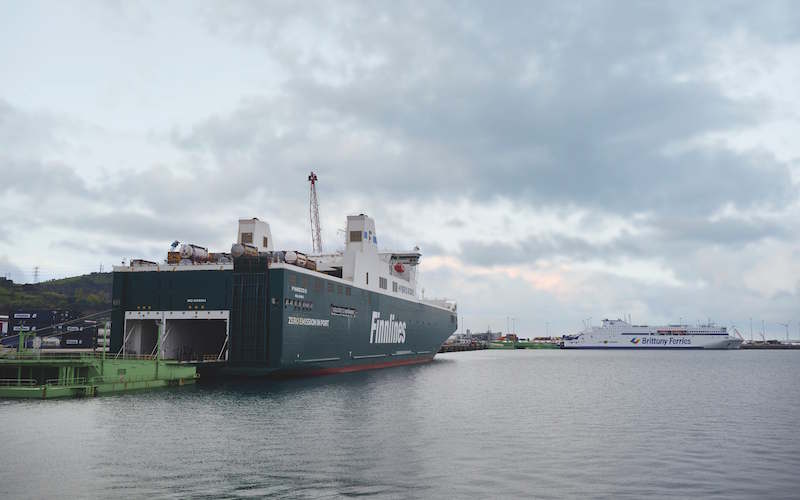
Image: Bilbao is implementing shore-side power for vessels in port (source: Bilbao Port Authority)