
Dutch company PortXchange has issued a direct call to the global port and shipping community: stop waiting for perfect emissions data and start using what you already have to decarbonise operations.
The emissions intelligence company says the industry must address the issue that it is clinging to data quality debates as a means to delay action on climate goals.
Sjoerd de Jager, MD PortXchange, said: “Ports already have more than enough data on emissions. What matters now is the direction of change, not decimal-point accuracy. Every day of hesitation is a day of avoidable emissions. It’s time to act on the emissions we already know, not the ones we hope to measure later.”
PortXchange highlights a deeper flaw in the sector’s climate strategy. While some ports have made real progress in reducing Scope 1 and 2 emissions through electrification, renewables, and operational upgrades, many are still ignoring their largest emissions source: Scope 3, especially from vessels and hinterland transport.
de Jager said: “You can win the compliance war and still lose the climate fight. Without acting on the full emissions picture, progress is only partial.”
This disconnect, PortXchange argues, is leading to a growing credibility gap. While ports promote visible sustainability initiatives, they often avoid addressing the larger, harder-to-tackle sources of emissions. The result is a widening gap between what is presented and what is actually achieved.
de Jager said: “If your port is installing solar panels while tripling cruise traffic, you’re not decarbonising, you’re greenwashing. Real emissions aren’t reduced with rooftop PR. They’re reduced by acting on the hotspots ports already have the data to see.”
PortXchange developed its EmissionInsider platform and Port Emissions Report to close the gap between data and action. These tools are intended to help ports not just measure emissions, but actually reduce them. They highlight the sources of emissions across ships, trucks, rail, and terminals, providing clear insights to support decarbonisation decisions. While real-time data helps manage daily operations, it is often the long-term patterns, drawn from periodic data, for example, the average time ships idle at berth, that reveal where real change is needed. These insights help shift behaviours, not just track activity. These records indicate whether a port’s sustainability efforts are having a lasting impact over time. PortXchange helps ports bring all of this together, allowing them to focus on action rather than just tracking.
de Jager said: “We built EmissionInsider to replace debates about data quality with decisions about decarbonisation. It’s not just another dashboard, it’s a system built to confront reality.”
The call to action comes as pressure mounts across the maritime sector. New EU ETS compliance demands, rising ESG scrutiny from investors, and tougher decarbonisation deadlines have placed ports under intense scrutiny. While many are preparing long-term fuel transition strategies, PortXchange argues that most are overlooking what can be done now, based on data already at their fingertips.
According to de Jager: “The ports that lead in this decade won’t be the ones that waited for hydrogen or synthetic fuels. They’ll be the ones that made tough operational decisions using the emissions insight they already had.”
PortXchange, a certified B Corp, works with ports and shipping stakeholders across Europe and the Americas to improve emissions visibility and coordination. Its tools are designed to support real-world decarbonization, not just regulatory compliance. PortXchange says its position is clear: the era of data collection without action must end. The company is now calling on ports, terminal operators, and maritime stakeholders who are ready to partner on real, measurable decarbonisation using the data they already possess.
de Jager concluded: “We’re not here to criticise from the sidelines. We’re here to partner with those who are serious about cutting emissions, not tomorrow, but today. If you’re ready to move beyond reports and start driving change, we’re ready to help you do it.”
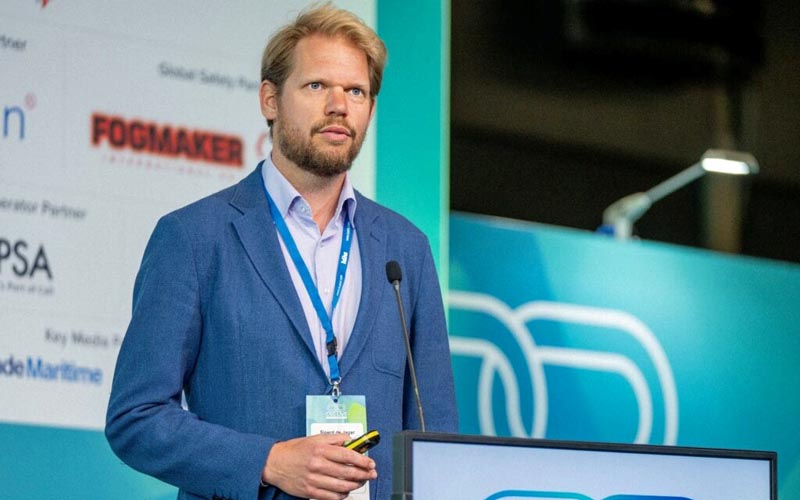
Image: Sjoerd de Jager, MD PortXchange (source: PortXchange)