
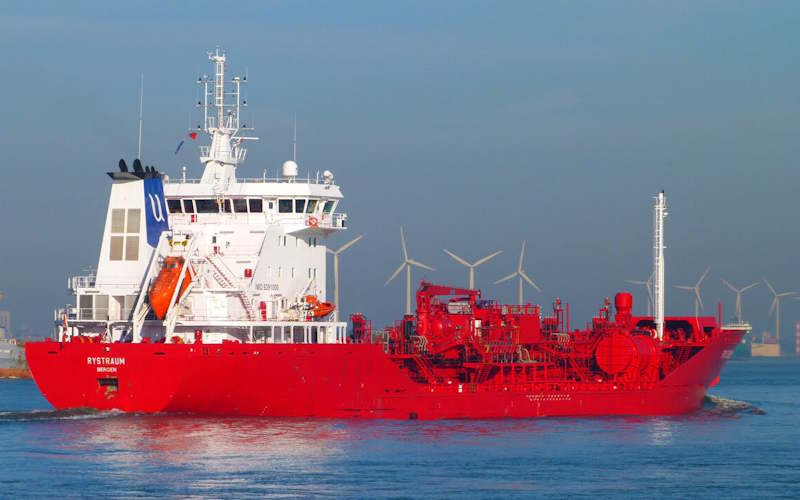
A collaborative effort between Brunvoll and Becker Marine Systems is reported to have delivered substantial fuel savings on two Utkilen vessels.
Brunvoll optimised propulsion efficiency with redesigned propeller blades and a new reduction gear ratio, while Becker Marine Systems added Mewis Ducts to enhance flow conditions. The combined measures cut fuel consumption by 17% at normal sailing speeds — and up to 25% in ballast conditions.
Mads E Melbø, Sales Manager Retrofit, Brunvoll, said: “When we take on a project like this, we are careful not to overpromise. In this case, however, we underestimated the impact — and were positively surprised by the vessels’ performance, which exceeded even our most optimistic expectations. I would like to highlight the exceptional work carried out by our hydrodynamicist, Jahn Terje, and the team around him, whose efforts have been key to achieving these results. We are also grateful for the strong collaboration with Utkilen and Becker Marine Systems throughout the project.”
Two chemical tankers, Golfstraum (delivered in 2011) and Rystraum (2012), were identified by Utkilen as prime candidates for performance improvements, both due to changes in their operational profiles since they were built and as part of Utkilen’s ongoing fleet optimisation efforts.
Jarle Hillestad, Head of Ship Management, Utkilen, said: “The results are clear. With rising regulatory demands and increasing pressure to reduce emissions, it’s vital that we continue to optimise what we have. When we learned what Brunvoll could offer, this project quickly became a natural next step.”
To identify the most efficient measures in terms of both energy and cost, Brunvoll’s team of hydrodynamicists worked in close collaboration with Utkilen and Becker Marine Systems, and ensured that each measure was both effective and well aligned with the vessels’ operational profile.
Reducing a vessel’s service speed is, in itself, an effective way to lower energy consumption and emissions. To fully realise the potential savings, however, further optimisation steps may be taken. The service speed was reduced from 14.5 knots to 12.5 knots. This reduced service speed — combined with downgrading the vessel’s ice class from 1A Super to 1A — provided greater flexibility in the propeller design process. Brunvoll’s hydrodynamics team was thus able to develop a lighter propeller with significantly higher efficiency.
The gear ratio between the main engine and the propeller has been increased to lower the rotational speed of the propeller to match the new service speed and propeller design.
The Mewis Duct from Becker Marine Systems is an energy-saving device that enhances the inflow to the propeller. Tailored to the vessel’s hull shape, it ensures a more uniform inflow and improved operating conditions, thereby increasing propeller efficiency.
Both vessels were also sandblasted and repainted, further contributing to the overall efficiency gains. These improvements, however, cannot be attributed specifically to either Brunvoll or Becker Marine Systems. The results presented are according to Utkilen’s own data gathering and calculations, using figures from 68 days before and 68 days after the retrofit project took place. Utkilen’s fleet operates primarily in Northern Europe, placing it under both EU and IMO environmental regulations, including FuelEU Maritime, EEXI, and CII. For the CII, both vessels received a grade C for 2024, but projections indicate a improvement to grade A by 2025, with this performance expected to be maintained through 2029/2030.
In terms of the EU ETS, where costs are tied to fluctuating carbon pricing, the retrofit has already begun to generate measurable savings. Despite only 70% of 2025 being eligible for reductions (due to the timing of the retrofit), Utkilen expects to save around €200,000 in emission-related taxes that year. With carbon prices forecasted to rise further, the savings are projected to increase to around €400,000 in 2026, underscoring both the environmental and economic benefits of the investment.
The payback time for Utkilen’s investment in energy-efficiency measures is estimated at about 3.5 years based on fuel cost savings alone. This calculation does not include the additional financial benefits expected from reduced compliance costs under FuelEU Maritime and EU ETS.
Image: Utklen tanker ‘Rystraum’ (credit: Wil Weijsters)