
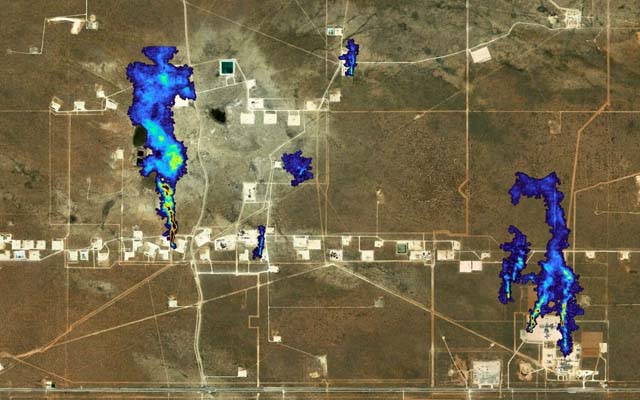
The US-based Carbon Mapper Coalition has launched its first satellite, Tanager-1, which marks a critical milestone in Carbon Mapper’s work to drive local action on methane and CO2 super-emitters, on a global basis.
The satellite was developed by Planet Labswith technology from NASA’s Jet Propulsion Laboratory (JPL). The satellite was launched on the SpaceX Transporter-11 Rideshare mission. Tanager-1 is the first of a series of satellites being developed and deployed through a unique public-private partnership powered by philanthropy that brings together diverse technical, scientific, engineering and policy expertise to accomplish bold emission reduction objectives. The coalition, led by the non-profit Carbon Mapper, includes JPL, Planet Labs, RMI and Arizona State University alongside philanthropic supporters including High Tide Foundation, Grantham Foundation for the Protection of the Environment, Bloomberg Philanthropies, Children’s Investment Fund Foundation and Zegar Family Foundation, among others.
Richard Lawrence, Founder and Executive Chairman, High Tide Foundation said: “There is more momentum than ever to act on climate. But a lack of public and private investment in global methane and CO2 monitoring has left gaps that leave many emissions untracked and unaddressed. With the launch of Tanager-1 we are scaling up high impact monitoring to drive transparency of super-emitters everywhere and grow society’s collective capacity to be a big part of the solution.”
Michael R Bloomberg, UN Special Envoy on Climate Ambition and Solutions, and Founder of Bloomberg LP and Bloomberg Philanthropies, added: “Data from this satellite will dramatically improve our ability to pinpoint leaks of methane and CO2 and ensure action is taken to stop them. It’s a great example of how new technology can lead to more transparency and faster progress in cutting emissions — which is needed to avoid the worst impacts of climate change.”
Methane is over 80 times more powerful at retaining heat in the atmosphere than CO2, contributing to about 30% of global temperature rise to date. Given its outsized climate impact and relatively short lifespan (methane lasts about a decade in the atmosphere), addressing methane is considered to be the best down payment society can make today to slow the rate of global temperature rise.
Tanager’s capabilities complement other emissions-detecting sensors in orbit by zooming in on methane super-emitters — facilities or equipment that emit >100 kilograms per hour. The Tanager-1 satellite will provide observations with unprecedented granularity to empower industry, policymakers, regulators, and civil society to take actions that reduce emissions at the source. In addition to slowing climate change, mitigating methane will improve air quality by reducing co-emitted toxic air pollutants.
Riley Duren, Carbon Mapper Co-Founder and CEO said: “Methane super-emitters represent a disproportionate climate risk and opportunity — contributing up to 20–60% of a region’s total emissions in some sectors. We have shown that finding and fixing these emissions can result in large reductions that, with sustained monitoring, can stay mitigated. Observations from Tanager will enable Carbon Mapper to grow its publicly available data, and this first satellite is an exciting step toward our goal to scale up a full constellation of satellites to detect and track up to 90% of super-emitting sources globally with daily frequency or better.”
Through demonstration pilots leveraging aircraft equipped with imaging spectrometers (including Arizona State University Center for Global Discovery and Conservation Science’s Global Airborne Observatory and JPL’s AVIRIS-NG), Carbon Mapper found that nearly half of super-emitting events flagged for state agencies and operators were previously unknown, and once identified, were able to be mitigated.
James Graf, director, JPL Earth Science and Technology Directorate, said: “The launch of Tanager-1 continues the crucial work of locating greenhouse gas emissions sources with a degree of resolution that will enable stakeholders to take action. We are excited to see the JPL imaging spectrometer technology providing direct societal impact. We also see great promise in tackling other environmental challenges through public-private partnerships as demonstrated by the Carbon Mapper Coalition.”
Will Marshall, Co-Founder and CEO of Planet, said: “The Tanager-1 mission will use incredible technology to pinpoint emitters and guide action to stop them. This is a remarkable coalition that we are incredibly proud to be a part of. Combining cutting-edge imaging spectrometer technology from JPL with an innovative small-sat bus from Planet and data processing from Carbon Mapper, the consortium itself is a powerful example of actors coming together to solve hard world challenges. We expect its impact on methane emitters to have a lasting, positive impact on the planet.”
A core part of Carbon Mapper’s mission is making its methane and CO2 data and insights available on its public online portal for non-commercial use. Today, the portal includes tens of thousands of plumes observed from air and space and soon will include methane data from Tanager-1. With this powerful tool, the organisation is advancing data transparency and accessibility that can strengthen societal awareness on the exact sources of emissions, prompt mitigation action, improve accountability, prioritise solutions and investments, and help reduce emissions quickly to meet bold climate goals.
Image: Methane plumes from oil and gas facilities in the Permian Basin observed by Carbon Mapper airborne surveys and available on its public portal (source: Carbon Mapper/PR Newswire)