
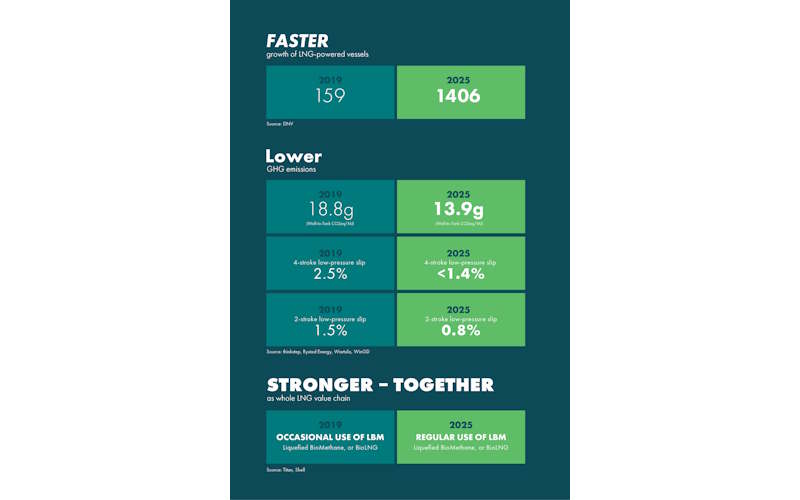
Sea-LNG, the coalition supporting the methane decarbonisation pathway, has underlined recent progress made in reducing GHG emissions from LNG as a marine fuel, the developments in bunkering of liquefied biomethane and the exponential growth of LNG-powered shipping.
In the last six years Sea-LNG Members have been instrumental in the global growth of the LNG-powered fleet and the everyday use of biomethane as a marine fuel. This growth in cleaner, greener marine fuel been matched by technology improvements to cut GHG emissions from LNG.
According to Sea-LNG, energy producers have cut well-to-wake emissions by a quarter in the same period, while engine manufacturers have taken practical steps to almost halve the emissions performance of those engines with methane slip, representing real progress towards eliminating methane slip this decade.
At the recent London International Shipping Week, the leadership of ABS and DNV – two of the largest classification societies – highlighted the importance of LNG, and the pathway it enables through liquefied biomethane (LBM/bio-LNG) and e-methane. The industry also notes the risk of unintended consequences from regulations for which the supporting guidelines have not yet been fully developed.
SeaLNG says it represents the whole LNG value chain and is the only maritime Industry organisation advocating for LNG and the methane decarbonisation pathway. It has for years suggested that regulations be firmly founded on proven science and remain technology neutral. Within this context it is also important that regulators be practical and realistic as to what can be accomplished in any given timeline.
Peter Keller, Sea-LNG Chairman, said: “The evidence is clear: LNG is delivering emissions reductions now and providing a practical pathway to net-zero through biomethane and e-methane. It is essential that future regulation builds on this momentum and recognises the proven benefits of the methane decarbonisation pathway.”
Steve Esau, Sea-LNG COO, added: “Independent studies by Sphera and Rystad Energy confirm a steady decline in well-to-tank emissions from LNG over the past decade. With further reductions expected as supply chains evolve, and with LBM and e-methane scaling, the pathway is both credible today and vital for the industry’s long-term transition.”
Since its founding, Sea-LNG has initiated various studies on alternative maritime fuels and continues to support independent, current data-based research by leading experts. In September 2025, well-to-tank research by Rystad Energy showed GHG emissions well below FuelEU Maritime default values. An updated lifecycle study of well-to-wake GHG emissions for LNG as a marine fuel will be published in mid-2026.
Image: Collaboration across the entire value chain is driving down LNG emissions (source: Sea-LNG)