
Samsung Heavy Industries (SHI), HMM, Panasia, and Korean Register (KR) have reported on the successful demonstration of SHI’s onboard carbon capture and storage (OCCS) System.
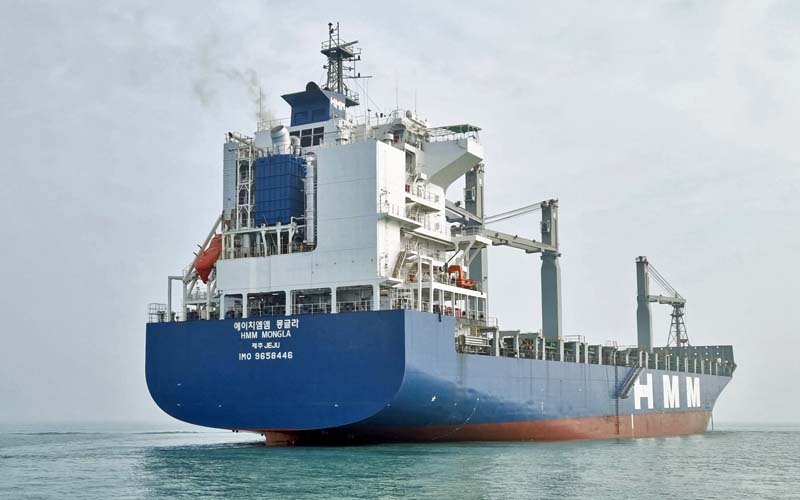
In July 2024, SHI and its partners in Korea installed an amine based OCCS on a HMM 2,200 TEU container ship and began testing the technology on the vessel in actual operations. The aim of this operational test was to present the possibility of creating a decarbonisation value chain linking shipbuilding shipping, and energy industries by deriving results that demonstrate the effectiveness and commercialisation potential of OCCS technology. In particular, the trial is considered to hold great significance as it validates the economic feasibility by minimising energy use with OCCS technology using waste heat generated during ship operations.
Liquid CO2 at about 99.9% purity captured in January and May 2025 was used as a raw material for producing eco-friendly methanol, which can serve as fuel for ships. This is recognised as a noteworthy case of liquefied CO2 utilisation that goes beyond simple underground storage.
Meanwhile, SHI says there is a growing call in the industry for urgent legal and institutional support such as the establishment of land infrastructure for the treatment of captured CO2, in order to promote the commercialisation of OCCS.
Dong-yeon Lee, VP and Director of Ship and Offshore Research Institute said: “OCCS will serve as an energy source for producing eco-friendly fuels and will play a key role in the decarbonisation of ships. Through close collaboration among the shipbuilding, shipping, and equipment industries, we aim to secure an early foothold in the OCCS market.”
Image: HMM’s 2,200 TEU Container Ship Equipped with OCCS system (source: Samsung Heavy Industries)