
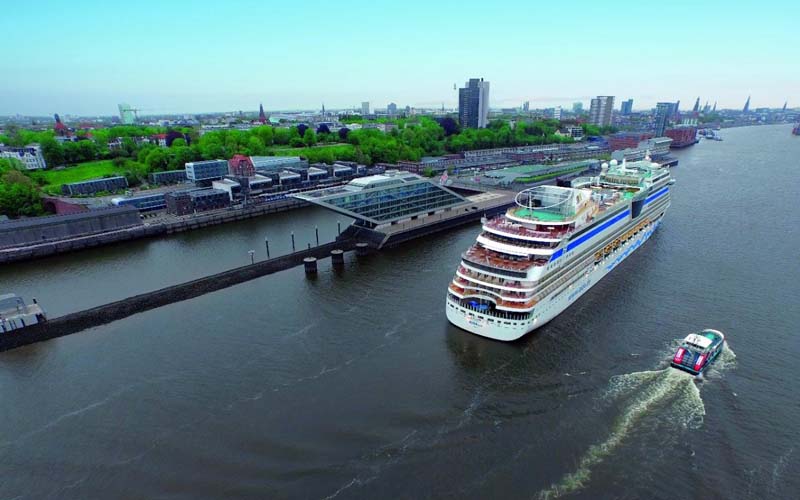
The Port of Hamburg is regarded as a pioneer in Europe in the provision of shore power infrastructure, having installed the initial infrastructure for cruise ships in 2020.
Corresponding facilities for inland vessels as well as for seagoing and cargo vessels are curently being developed. European regulations mandate that shore power must be available from 2030, but Hamburg’s investment means that supply of ships with electricity from sustainable sources from shore during layovers will be in place four years before this obligation comes into force.
From 2026, shore power infrastructure will be available at all cruise terminals. This is already the case at the cruise terminals in Altona and Steinwerder, and from 2026 also at the new terminal in HafenCity, where the shore power connection is scheduled to be installed and tested during the course of the year. For the use of shore power, the ships must be certified individually and have corresponding equipment on board.
The use of shore power is being expanded in conjunction with shipping company partners and customers of the Port of Hamburg. It is already being widely accepted and widely used by shipping companies, and in view of the technical development of new or newly ordered ships, the port authority expects the trend to continue and that new ships will generally be capable of connecting to shore power.
The Hamburg Port Authority has already concluded contractual agreements on the use of shore power with various shipping companies, including cruise lines AIDA Cruises, MSC Cruises and TUI Cruises, as well as Norway Cruise Line, Phoenix and Fred Olsen Cruises.
Based on the existing offer and in the course of the technical requirements created, the port authority expects cruise ships that are capable of shore power to favour stops in Hamburg from 2027 onwards.
Image: Hamburg’s first shore power was provided at the Altona cruise terminal (credit: Siemens)