
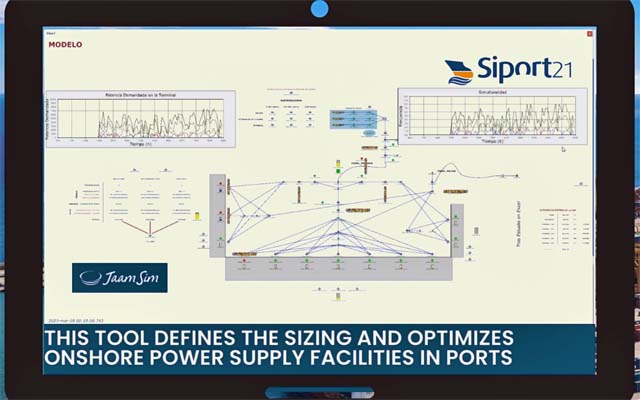
In answer to the European Union’s aim to electrify ports by 2030, Spanish company Siport21 has developed a simulator to help ports make the correct investment decision when installing onshore power supply (OPS).
Posts must instal the necessary infrastructure able to supply power to the moored vessels so that they can switch off their auxiliary engines, decreasing the greenhouse gas emissions. The EU goal demands that European ports must implement OPS technology to permit the vessel connection to the electricity grid. This system must ensure sufficient shore-side electrical power to meet a high percentage of demand based on their average annual throughput of container ships, passenger ships, and ro-ro vessels.
The size of the investment means that it is essential to accurately establish the need for energy. Siport21’s methodology can define the sizing and optimise OPS facilities in ports.
The simulator provides an estimate of hourly power demand over the course of a year associated with probability levels. This methodology will help ports to have probability-based estimates and their seasonal distribution. It will therefore be essential for decision-making, evaluating the cost-benefit of the investment to be made and the total power to be installed. In addition, the tool also shows the results of the decrease in carbon footprint in the port due to the operation of the OPS.
Image: OPS simulator (source: Siport21)