
Researchers at Brunel University of London and UK start-up company Genuine H2 are working on a project to split seawater into hydrogen, store it safely on-board vessels and burn it to power engines, emitting only steam.
Led by Brunel’s Centre for Powertrain and Fuels and Genuine H2, the project is the UK’s first all-in-one hydrogen maritime demonstrator. It splits hydrogen directly from seawater, then stores it safely at room temperature and pressure, without pressurised tanks or super-cold systems needed normally.
Professor Xinyan Wang, Brunel University, Centre for Advanced Powertrain and Fuels, said: “Water will be turned into power. We take seawater, split it using renewable electricity to make hydrogen gas, store it onboard as a molecular solid, then burn it in an engine instead of diesel, with no CO₂.”
Backed by funding of £1.44m from the Department for Transport’s UK Shore initiative and Innovate UK, the project is part of a £30m push to decarbonise British shipping. The goal is to take diesel out of vessels including ferries, trawlers and workboats where batteries are impractical.
The project is examining a new hydrogen engine built on two innovations. There are electrodes that can split hydrogen straight out of seawater, cutting out the need for costly desalination. And a thinner-than-paper ‘nano film’ that locks the hydrogen away safely in an unpressurised solid form at room temperature, rather than the established hydrogen storage method of freezing it at -250°C in heavy pressurised tanks. Together these breakthroughs promise a safe, compact, ready-to-use seaworthy fuel supply that can potentially fuel various, mainly smaller, vessel types.
The lab-scale inventions will be commercialised in partnership with Genuine H2 and the Centre for Process Innovation (CPI), to prove they can be manufactured at scale using current UK supply chains.
Codenamed GH2Dem, the project will encompass the first test of Brunel’s heavy-duty hydrogen combustion engine, to be installed on campus. It will be powered entirely by Genuine H2’s electrolyser and storage system, creating a full hydrogen chain—from seawater, to storage, to propulsion. The whole process is circular. As well as clean fuel, it produces pure water that can be reused or safely poured back into the sea.
Wang concluded: “Brunel has been active in research and development of next generation hydrogen combustion engines. By working with leading research partners in the hydrogen production and storage, this project moves further to demonstrate a complete solution for marine propulsion from renewable energy via seawater to engine propulsion for marine vessels.”
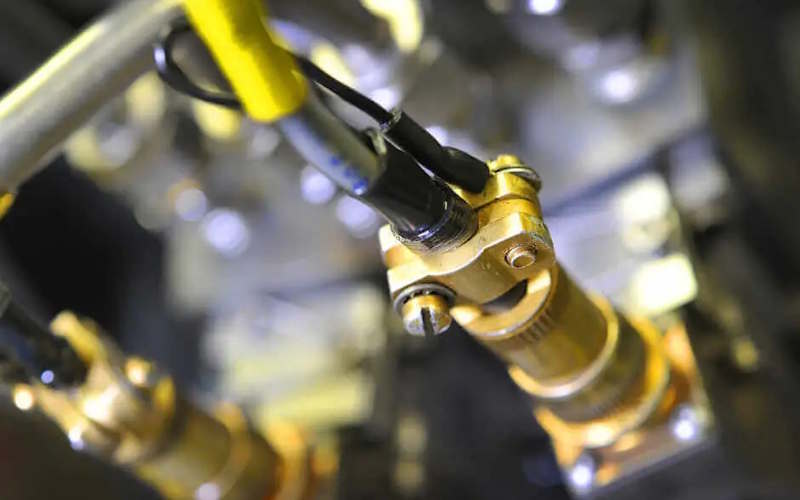
Image: Brunel University and Genuine H2 aim to demonstrate extraction and storage of hydrogen from water as fuel (source: Brunel University)