
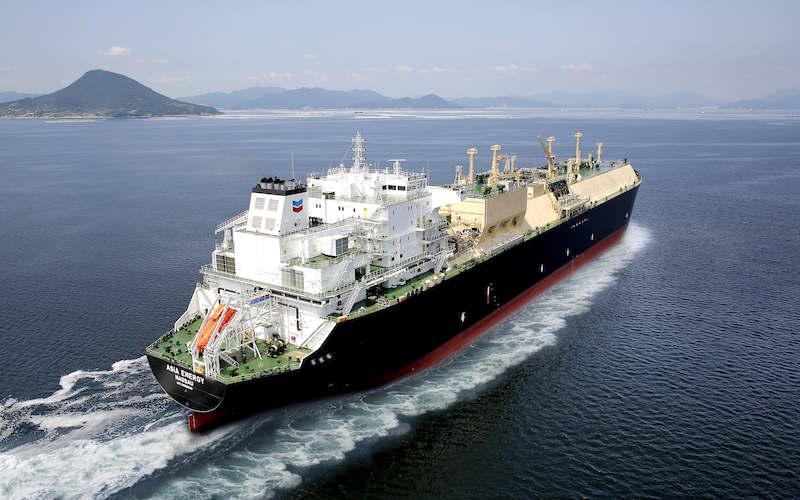
Wärtsilä has successfully completed the conversion of one engine on three LNG carriers operated by Chevron Transport Corporation from dual-fuel (DF) to spark gas (SG) operation.
This conversion aims to lower GHG emissions from the vessels by reducing methane slip, un-combusted methane that can escape into the atmosphere from LNG fuel. Following the successful conversion of these first three vessels, three additional vessel conversions are planned for execution later this year and next year, bringing the total number of converted vessels to six.
This project represents a technical collaboration within the marine sector focused on addressing methane emissions from LNG-fuelled vessels. Wärtsilä’s 50DF to spark gas conversion project will modify the engines in service to operate as spark gas, using spark ignition versus diesel pilot fuel to initiate combustion. This enables a more optimised combustion process, thereby reducing the engine methane slip and improving efficiency.
Barbara Pickering, President, Chevron Shipping, said: “Advancing lower-emission shipping will require both technology innovation and industry collaboration. Through projects like this, we can gain valuable operational insights, evaluate solutions and contribute to the collective experience needed to help move the industry forward while continuing to provide safe and reliable transport of energy.”
The spark gas conversion for the Wärtsilä 50DF engine minimises methane emissions by introducing an electrically controlled pre-combustion chamber valve. This enables a more optimised combustion process. The estimated result is that, on an IMO weighted (E2-cycle) average, the conversion reduces methane emissions down to 1.1% of fuel use. The solution is available to vessels in the industry with existing Wärtsilä 50DF engines for diesel-electric propulsion, the majority of which are LNG carriers.
Roger Holm, President, Wärtsilä Marine and EVP Wärtsilä Corporation, added: “This achievement highlights the importance of technology development and cross-industry collaboration in advancing lower-emissions solutions for shipping. By working collaboratively across the marine sector, initiatives such as this project contribute to broader efforts to reduce greenhouse gas emissions.”
Wärtsilä claims 30 years of experience in LNG technology, and is is providing strong performance – both with the dual fuel flexibility provided by the DF engine, as well as with the single fuel spark gas engine.
Image: Wärtsilä hascompleted the conversion of one engine on three Chevron LNG carriers from DF to spark gas operation (credit: Chevron Shipping)