
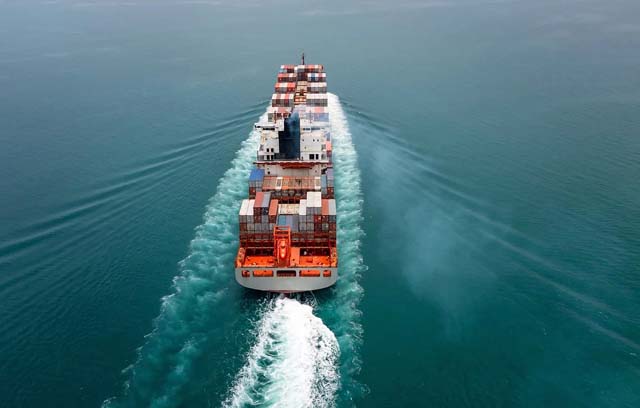
US company WasteFuel has announced an agreement with bp to collaborate on improving renewable fuel production for the maritime transportation sector.
WasteFuel was founded to solve two growing global crises: the need to decarbonise transportation as quickly as possible at massive scale, and the need to reduce waste, challenges which the company is addressing by converting municipal and agricultural waste into low-carbon fuels.
A the same time, WasteFuel has raised additional capital from a Series B fundraise which will be used to finance the further development of a global network of low-carbon bio-methanol facilities, the first of which is anticipated to be in Dubai, to supply global transportation leaders with sustainable bio-methanol to accelerate their transition to alternative fuels.
The memorandum of understanding (MoU) with bp covers the offtake of Waste-Fuel’s bio-methanol and a technical collaboration to improve bio-methanol production efficiency, yields and economics. As part of this agreement, bp’s proprietary technology will help optimise and improve WasteFuel’s low-carbon, bio-methanol production.
The company says that the MoU reflects the significant opportunity ahead to help drive the transition to a net-zero economy. It is also significant because strategic partnerships such as this are considered critical to address the waste and climate crises. WasteFuel’s existing investors include Maersk, NetJets, Prime Infra, i(x) Net Zero, Marc Benioff’s Time Ventures, Guy Oseary, and Aileen Getty amongst others, and the company is happy to welcome bp to the WasteFuel family.
With IMO’s MEPC expected to make final decision on the new targets to achieve net-zero emissions in the shipping sector, it is largely anticipated that the new target will be for the shipping sector to reach net-zero by 2050. The transportation sector is one of the largest sources of carbon emissions and is also on the leading edge of reform, as individual companies and global trade groups set ambitious goals and push towards decarbonisation. With over 90% of all consumer products transported over water, in the effort to reach net-zero, some of the biggest companies in the shipping industry are converting to bio-methanol-ready ships. Research shows that maritime emissions could be cut by between a third and a half this decade by using already available techniques, including bio-methanol.
Capitalizing on its IP portfolio and strategic partnerships, WasteFuel is working to lead the net-zero transition of the maritime transportation sector and already claims significant gains.