
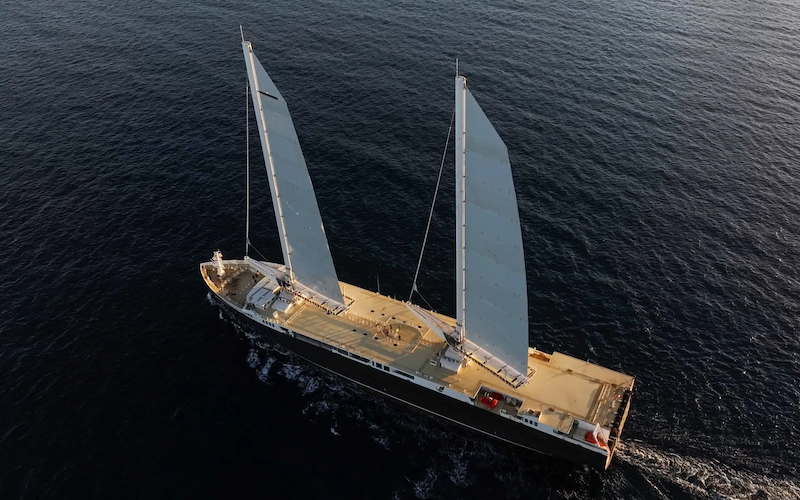
French shipping company Neoline has reported that its first operational wind-powered ro-ro vessel, ‘Neoliner Origin’ has achieved a 70% saving in fuel and emissions compared with a conventional vessel of similar size during its first year of operation.
Commissioned in October 2025, Neoliner Origin is a 136m ro-ro vessel designed to use wind as its primary source of propulsion. Operating between Europe and North America, Neoliner Origin covered more than 62,000 naut mile over nine commercial round trips, transporting nearly 56,000m³ of cargo, including vehicles, containers, out-of-gauge cargo, industrial machinery and refrigerated goods.
According to Neoline’s assessment, based on the GLEC (Global Logistics Emissions Council) fleet reference, Neoliner Origin saved 3,502t of fuel over a full year, representing an average reduction of 66% over the entire period and 70% when considering 2026 alone. These savings represent 11,228t CO2e compared with this reference.
The vessel also carried more than 170 passengers during its first year, with strong demand for this transatlantic crossing service. All these developments are considered a demonstration of the industrial and commercial potential of a shipping model incorporating wind propulsion on a large scale.
Neoliner Origin is fitted with two SolidSails developed by shipbuilder Chantiers de l’Atlantique, providing the first fully operational reference for these units. As could be expected, technical development of the SolidSails continued through this first year in service. Operating the vessel provided essential operational data to better understand the performance of wind propulsion and identify areas for improvement. With the rig fully operational, Neoliner Origin demonstrated its ability to regularly sail at over 15 knots under sail alone, reaching a peak speed through the water of 16.6 knots in June 2026 with the engine stopped. The technical issues with the sails limited their operating time, particularly with all sails deployed. Efforts to resolve these issues, together with partner Chantiers de l’Atlantique, will make it possible to significantly increase sail utilisation in 2027 and further reduce the vessel’s environmental impact. Therefore, a target has been set for achieving a reduction in fuel consumption and emissions in the coming year, and going forward, of at least 78%, compared with the GLEC fleet reference. Several actions are planned, including a scheduled maintenance period in February 2027 to achieve the full potential of the SolidSail rig.
Jean Zanuttini, Chairman and CEO, Neoline, said: “This first year of operations confirms the potential of wind propulsion to significantly reduce fuel consumption and CO2 emissions in maritime transport. It has also been challenging, as can be expected when developing a prototype vessel, and has enabled us to draw valuable lessons to improve its performance. Neoline also relies on the commitment of our technical and commercial partners and on the trust of our shipping customers who entrust us with their cargo. We would like to thank them for their commitment and support, which are essential to the continued development of this new transport solution. We are confident in our ability to approach, and potentially exceed, 80% fuel savings as early as 2027.”
Image: ‘Neoliner Origin’ (source: Neoline)